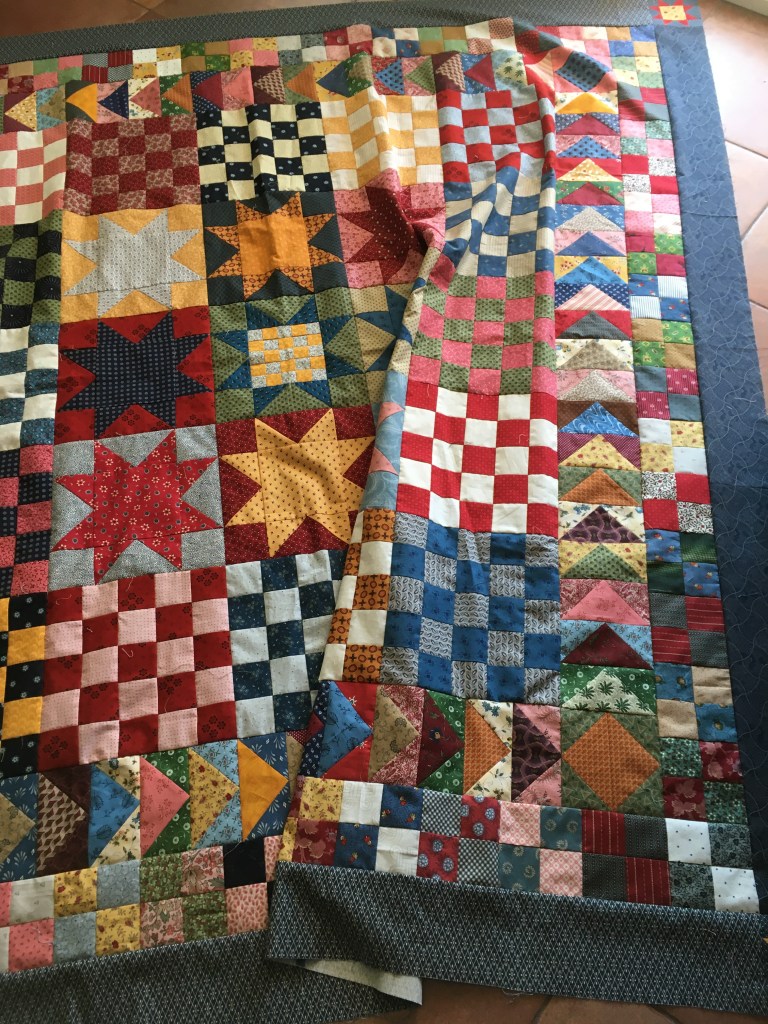
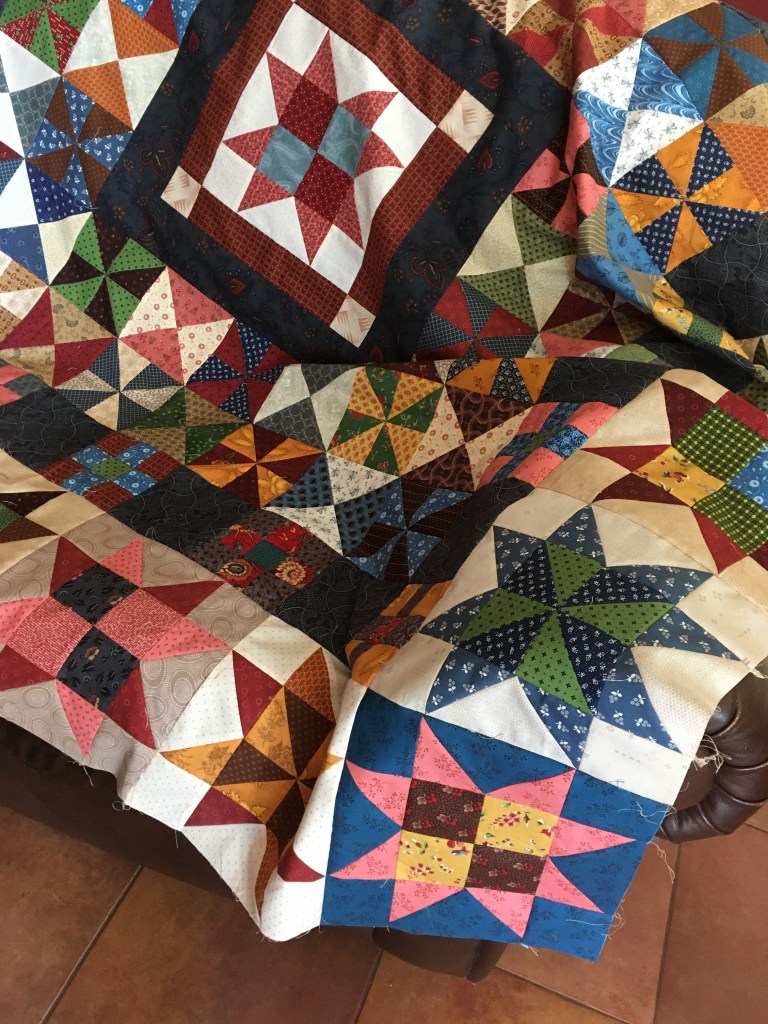
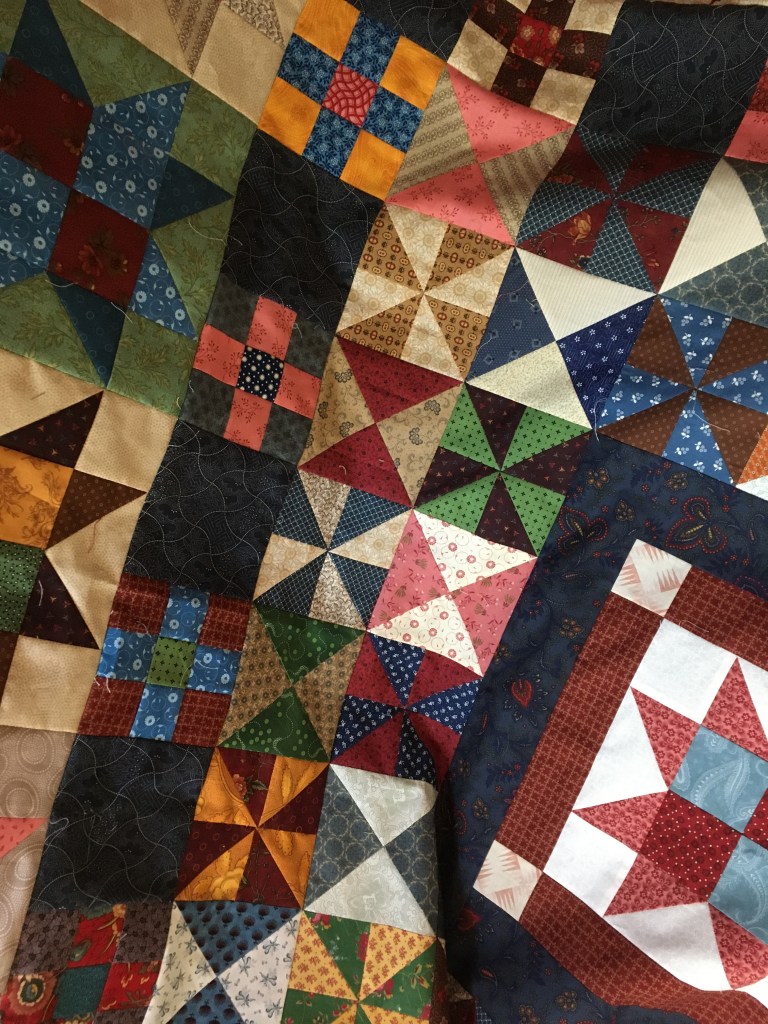
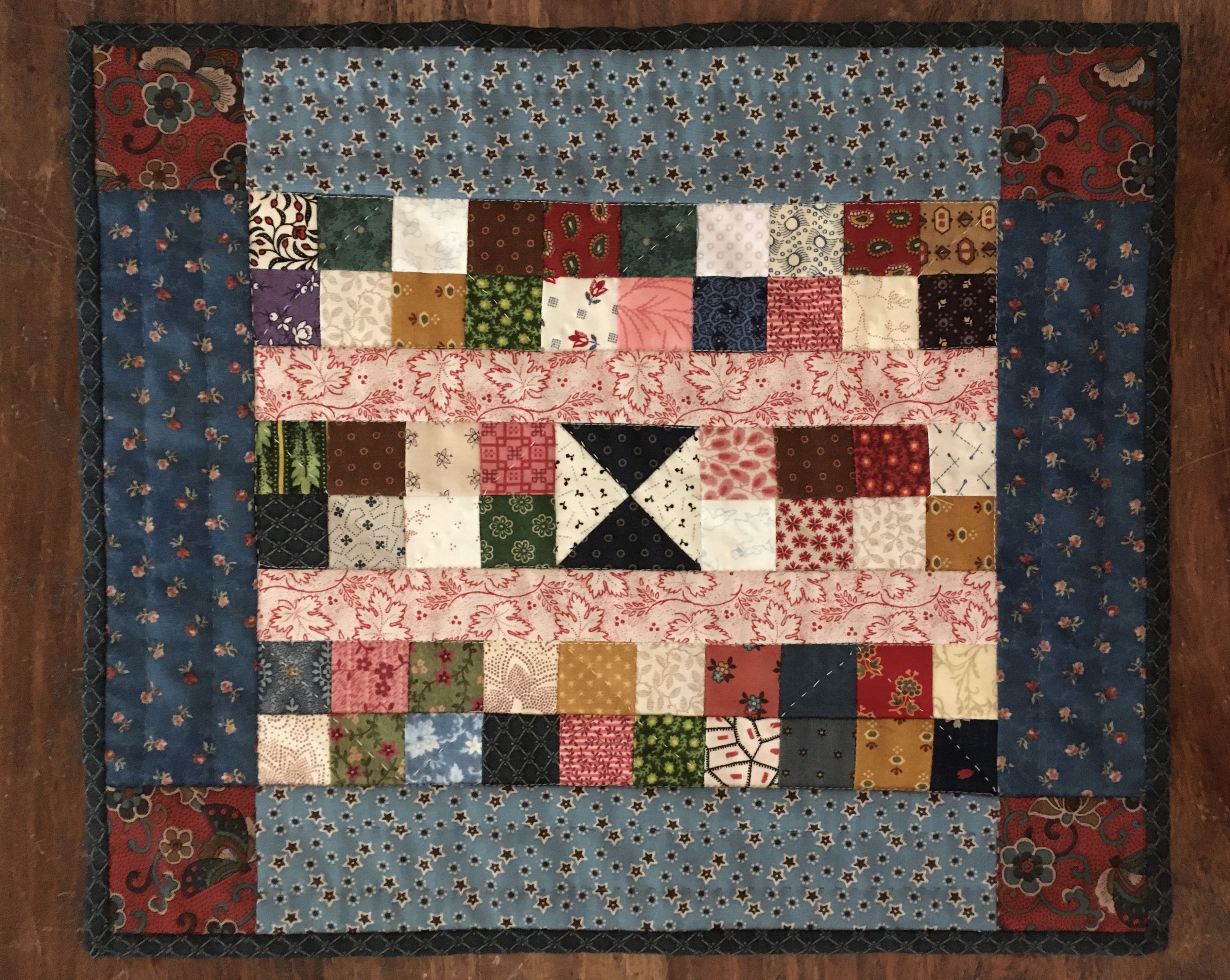
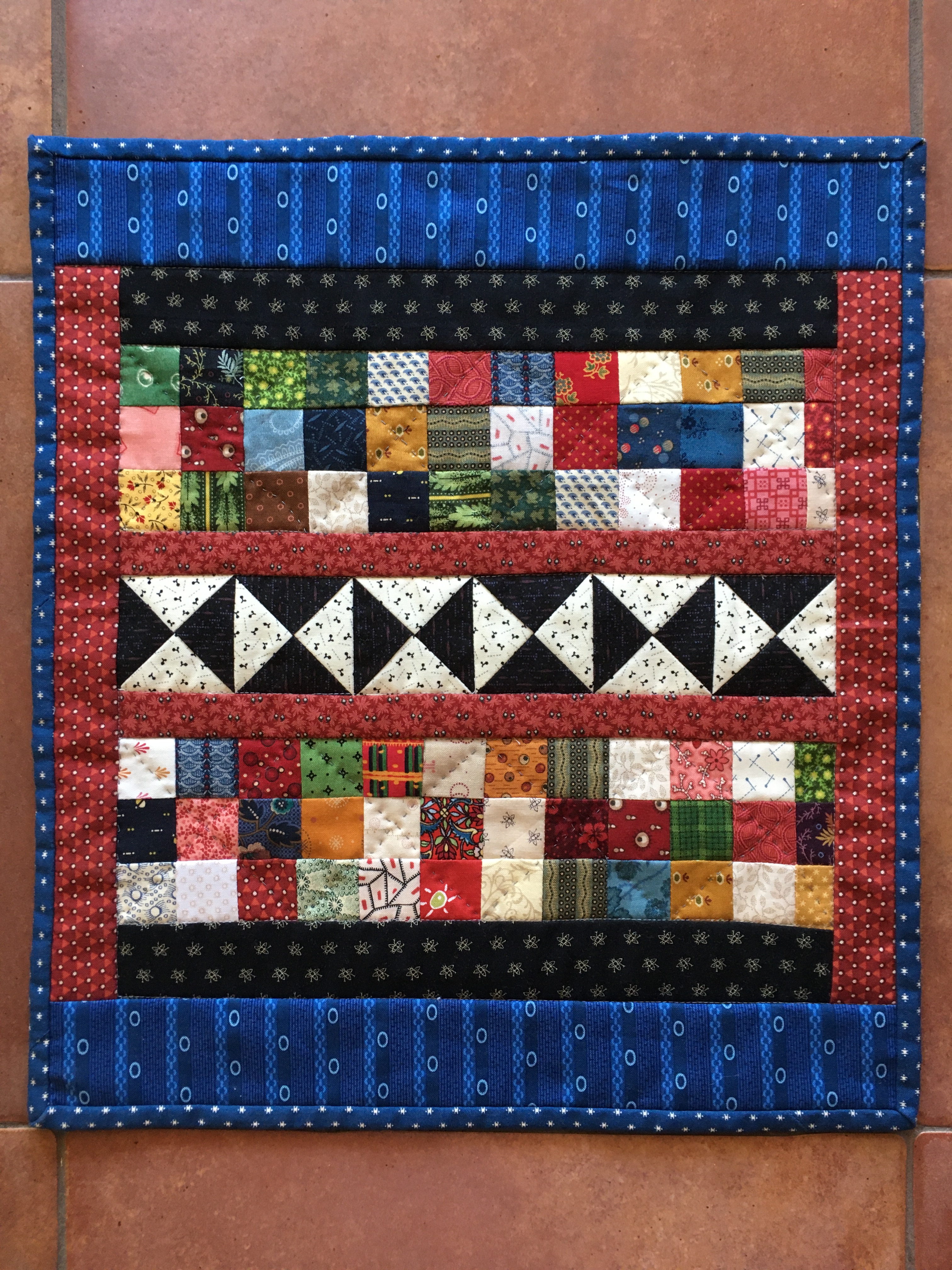
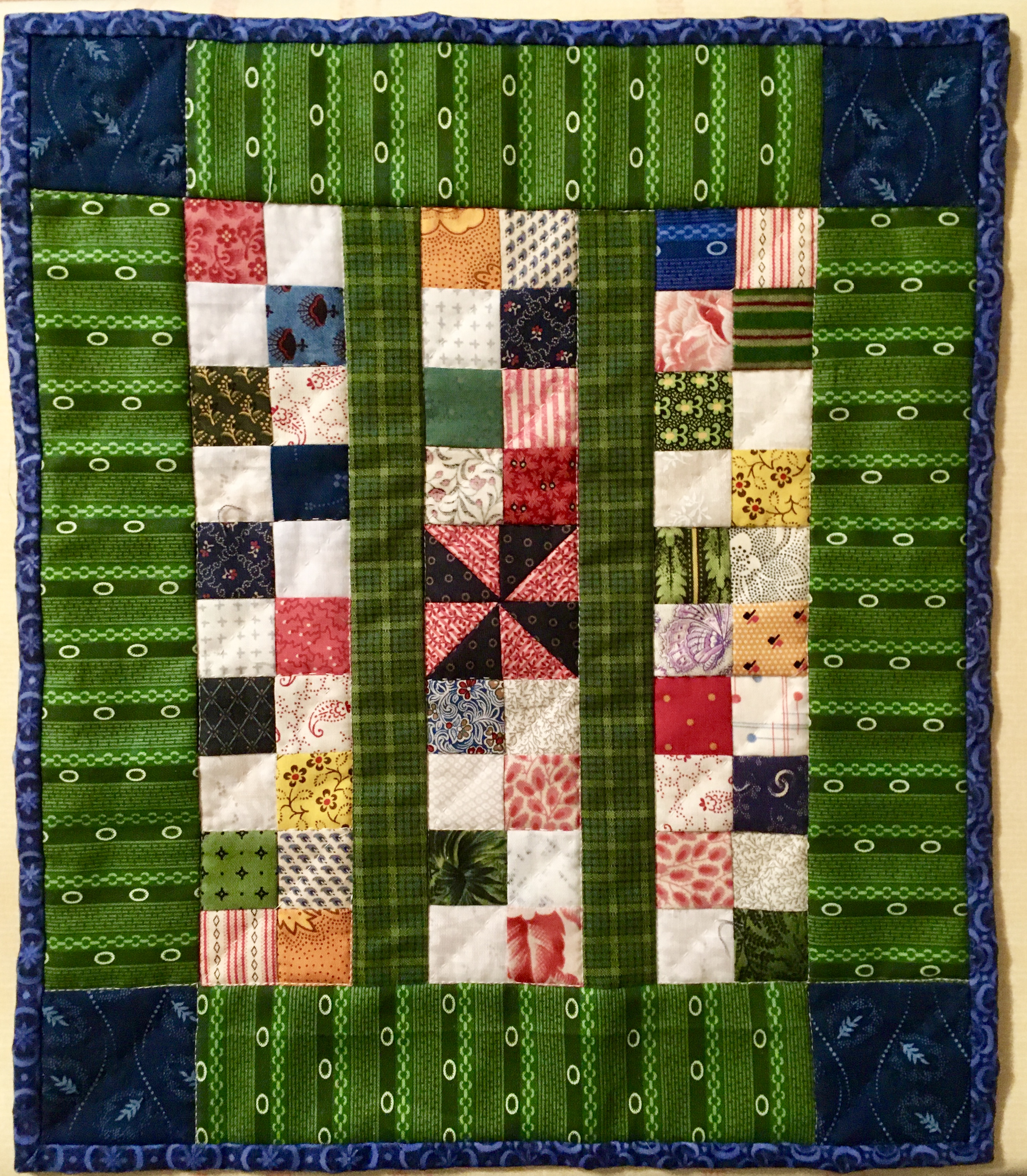
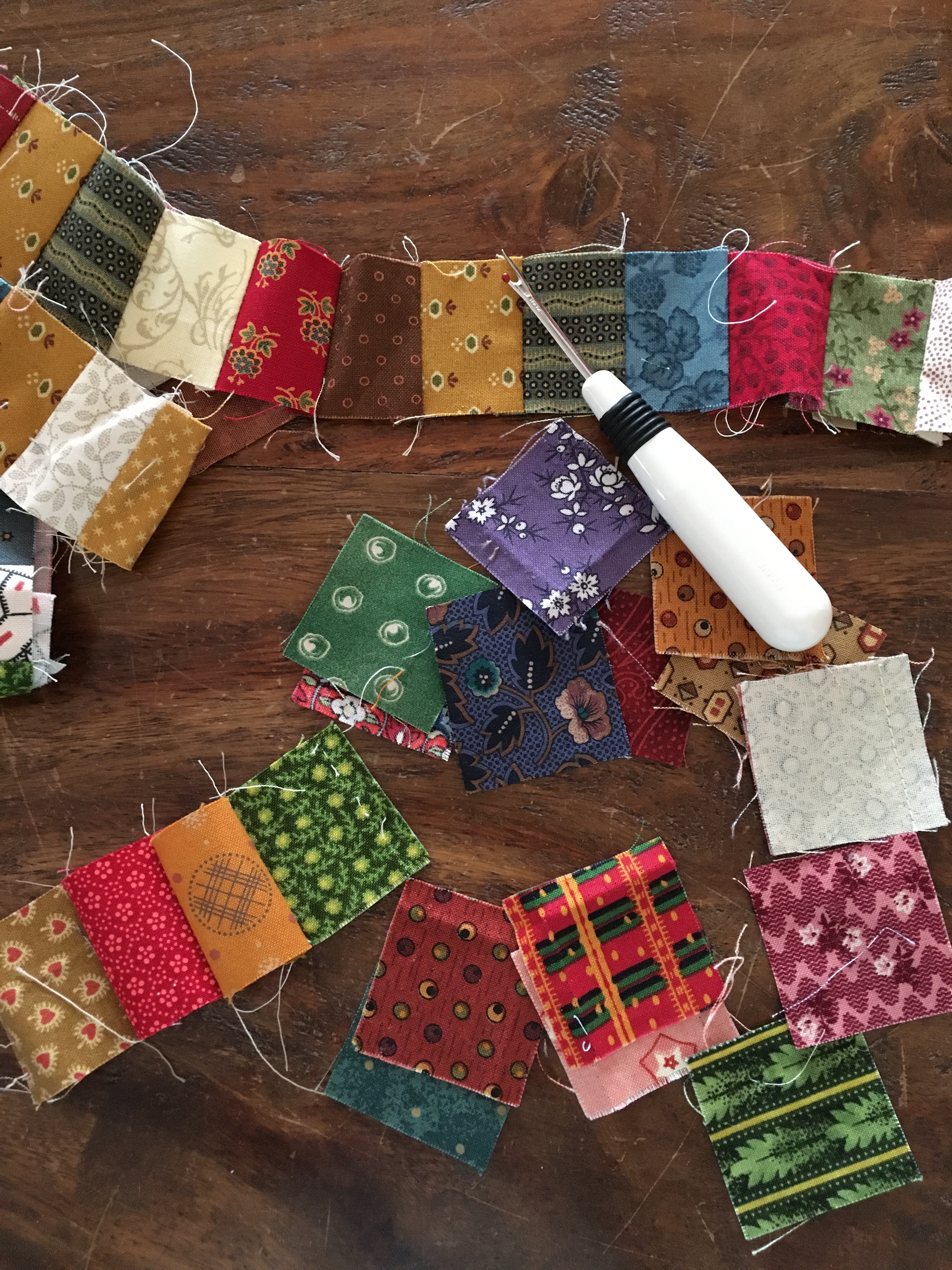
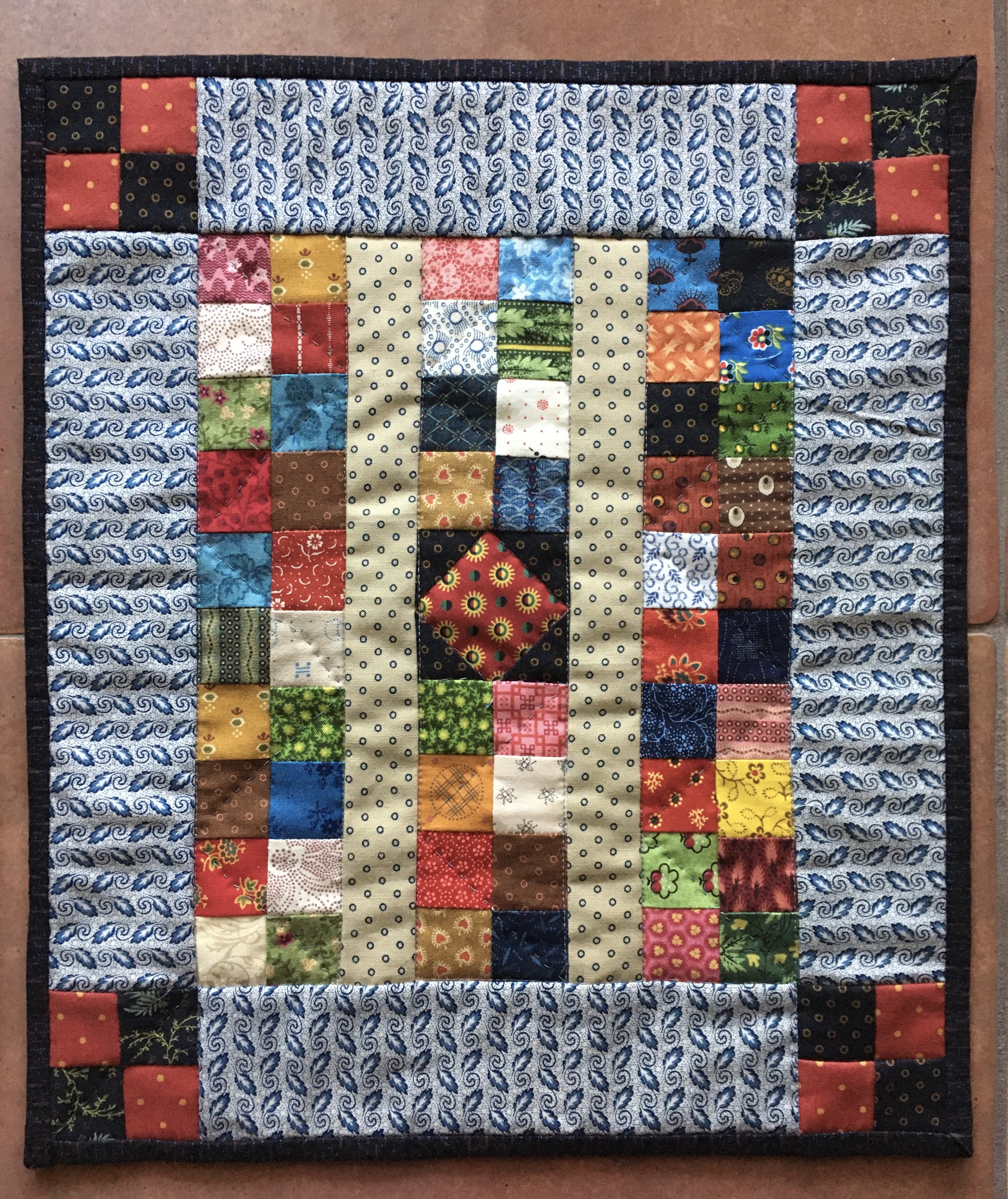
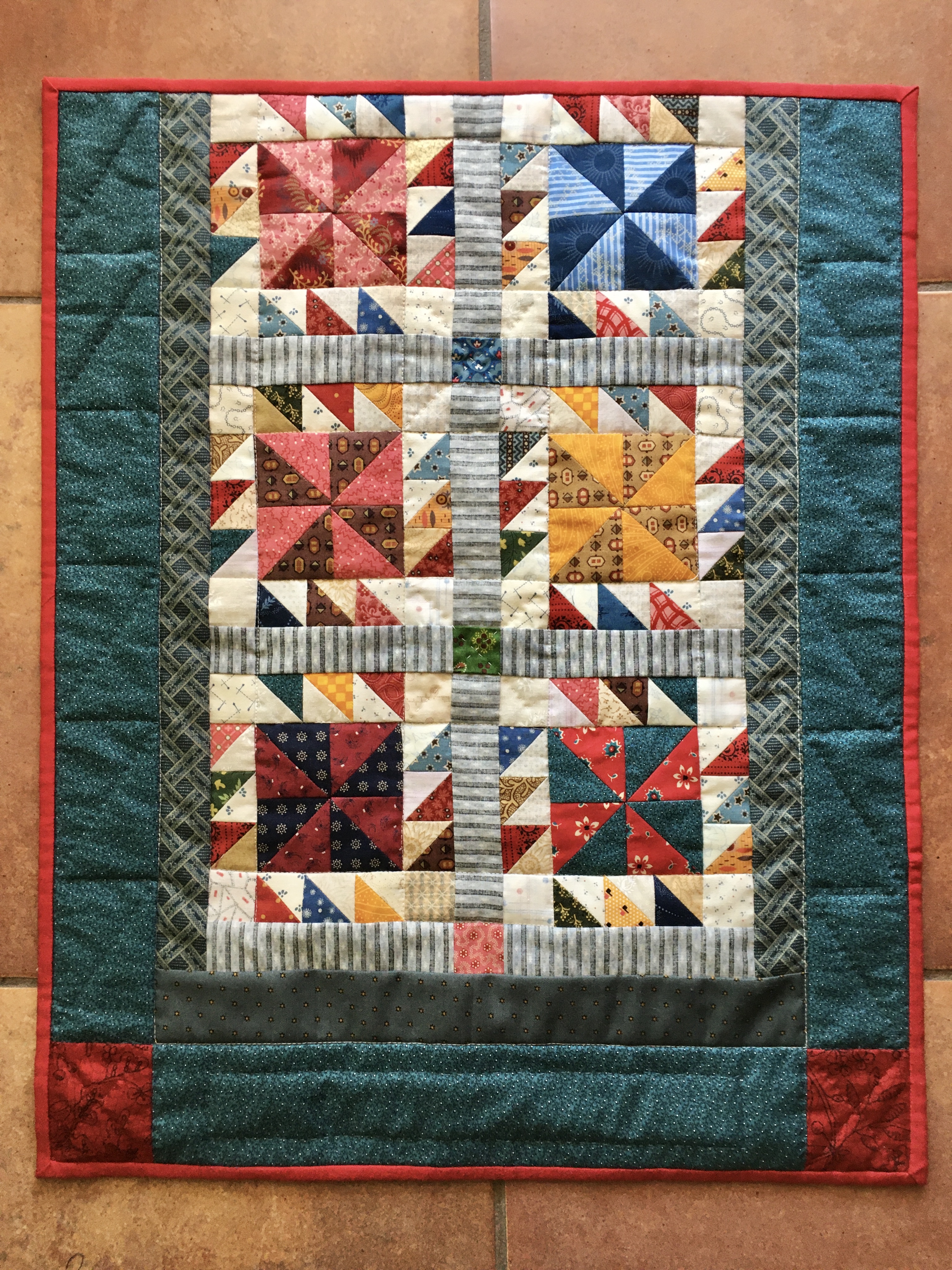
Post script to Eleanore’s quilt

I forgot the other Eleanore inspired tidbit in my last post.

I was in search of some more pinks and creams for my stash. I found an Etsy shop that was selling little bundles of fat eighths of various colors so I selected a pink bundle, labeled Bubblegum, and what I thought was a cream bundle, labeled Espresso. When I went to pay for them I saw that I was being charged an insane amount for shipping so I backed out of all the info I had given. Just before leaving the site a message popped up from the Etsy seller that the amount of shipping listed was not what would be charged in reality. So I put the two bundles back into my cart and then decided to read about the sellers before committing to my purchase. Where were they located that such a high shipping fee was involved, I wondered. London? Paris? Timbuktu?

Lo and behold: they are in Paynesville, MN.

Paynesville???!! That is the little town where my mother, Eleanore, graduated from high school! What a perfect dovetail into the bundle of fat quarters called Elinore’s Endeavors I had just ordered and it seemed to me again that my mother was winking and smiling down; having a good chuckle. I needed no more confirmation. I pressed the Buy button.

Unfortunately the “Espresso” bundle was not cream colors as I had expected. No, they were … BROWNS! (“Rats!” I thought to myself after opening them on Christmas.)

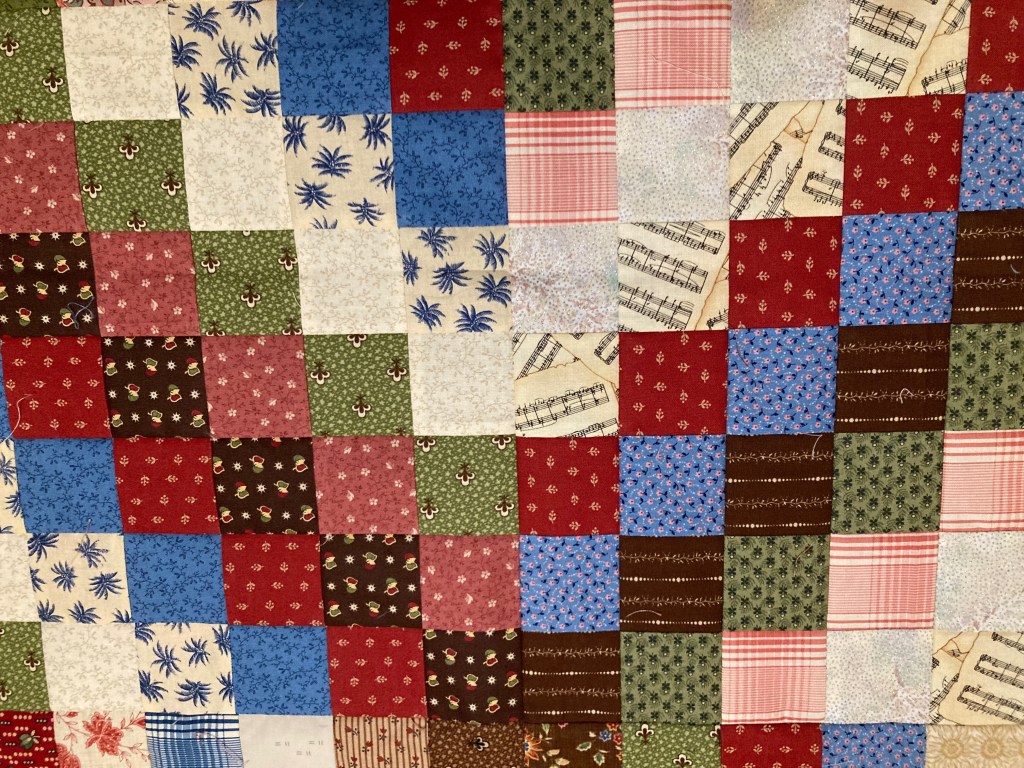
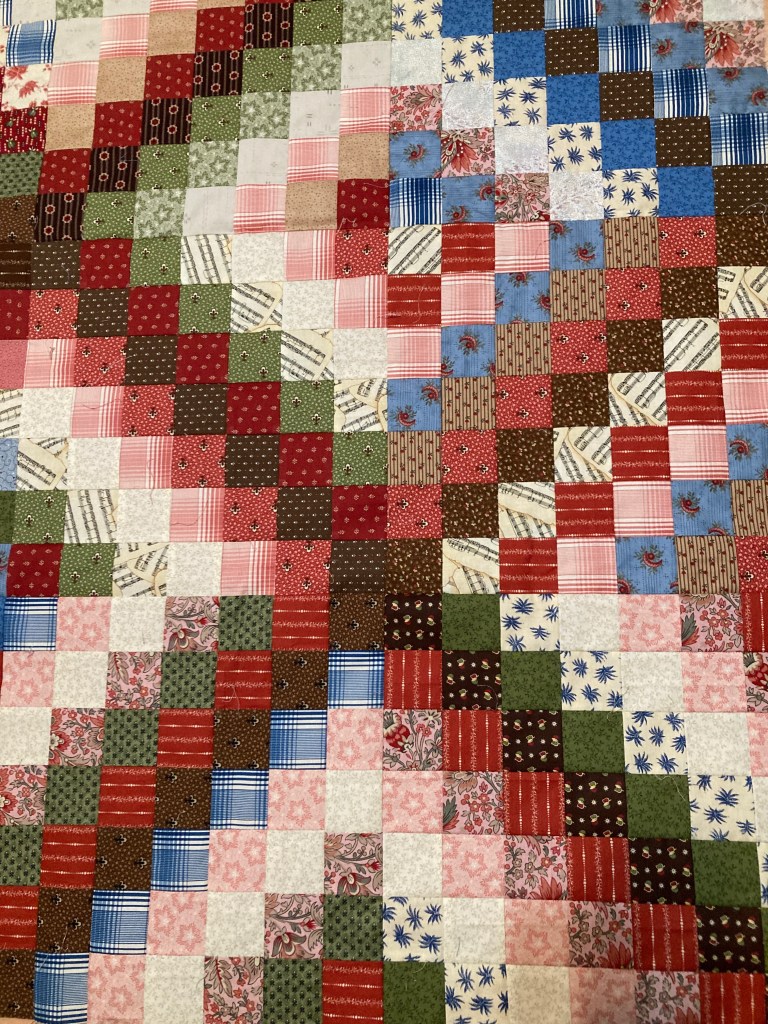
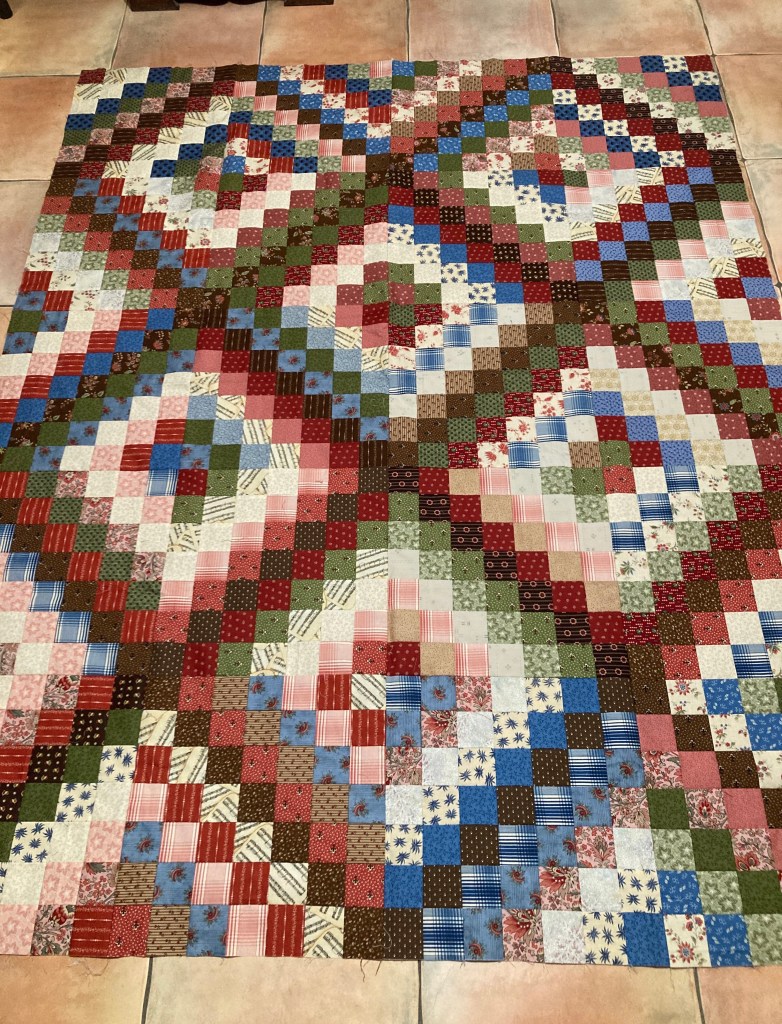
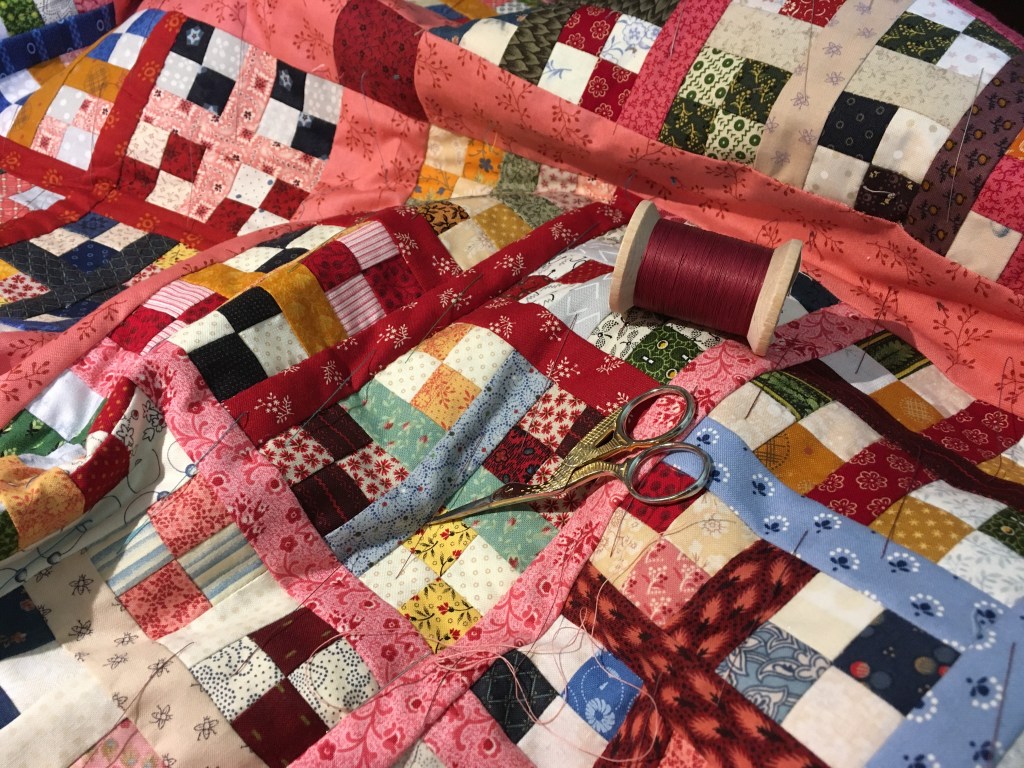
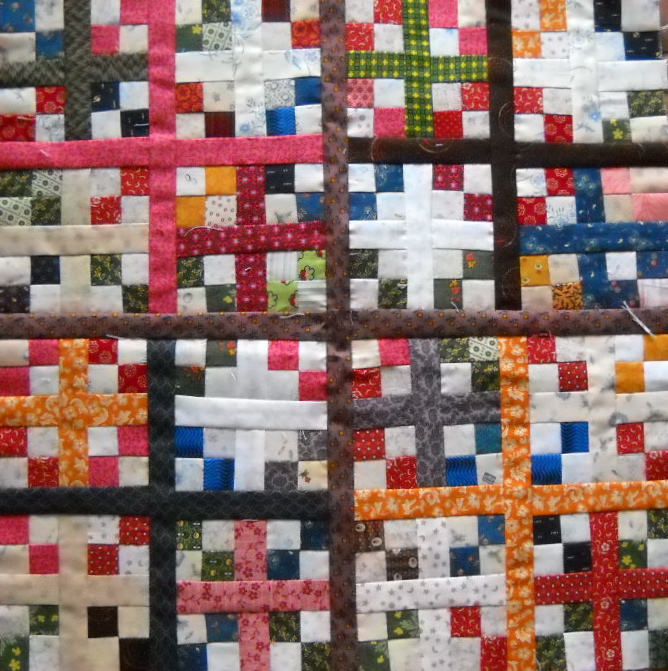
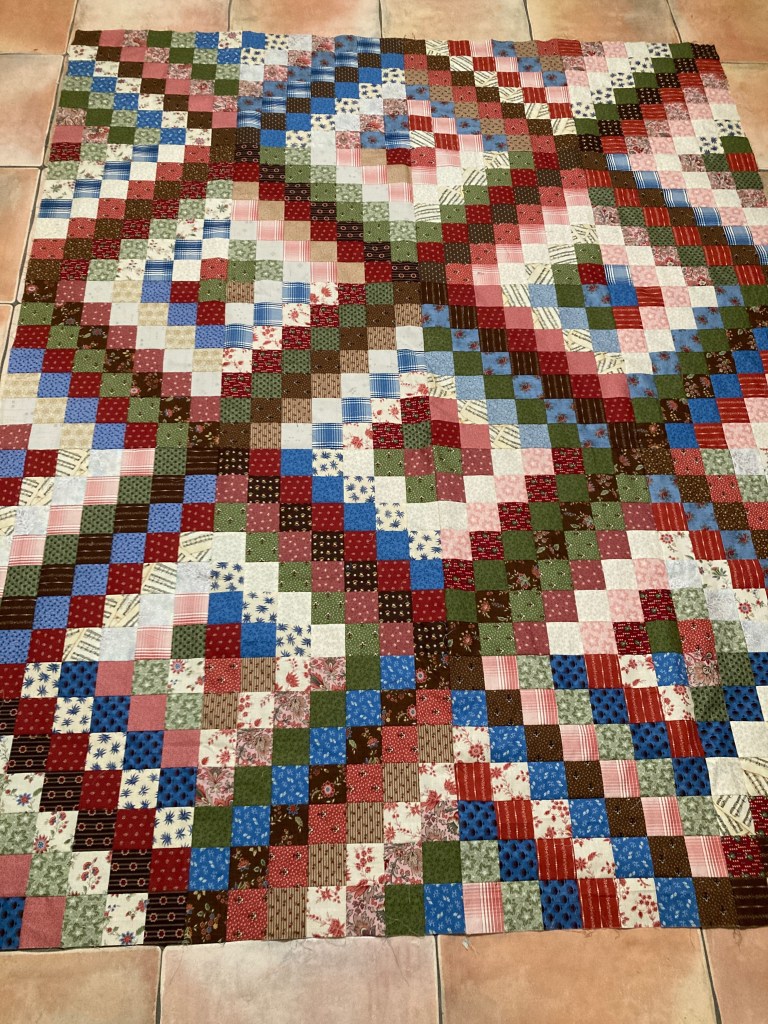
So they are part of the browns included in the Scrappy Trip Around the World.

And yes, they have their own beauty, I admit. As professional quilters will tell you, browns and blacks have a way of grounding you. And heaven knows we are all in need of some serious grounding these days.

Thank you, Eleanore R. And thanks to the little shop in Paynesville, too.

Here’s a link if you’re curious:

Eleanore’s Inspiration

After telling myself and a few others that I was going to retire from quilt making, and especially to retire from buying more fabric — !!! — I was seduced to purchase, after weeks and weeks of to-ing and fro-ing, a bundle of 40 fat quarters that kept popping up wherever I went on the internet to read the news. I was enticed first of all by its name: Elinore’s Endeavors (a Moda line designed by Betsy Chutchian) but also by its beautiful colors: reds, pinks, blues, greens, blues, browns and blacks. I told my husband that is what I wanted for Christmas so he wrapped it for me and I dutifully waited until Christmas Eve to open the box.

But before opening it I pondered and pondered how to best serve the fabric — which quilt pattern to use — while also drawing on memories of my mother, also named Eleanore, who was the person who taught me how to quilt.

After Christmas and after more hemming and hawing / changing my mind, I struck out on one of my Go To patterns: Scrappy Trip Around the World. I must have made a 6 or 7 of these by now. This is such a fun pattern, made popular by Bonnie Hunter and of which there are oodles of images to Google because so many quilters have given it a whirl. It’s fun because there are so many variations which means it never gets boring (I suffer from a bad case of “Okay, This is Boring Me Now!) and it goes together quickly. Because Elinore’s Endeavor’s fat quarter bundle had more browns than I would have liked I decided to use up most of the browns first and I think this quilt was a good way to use them.

I really felt my mother’s presence in making this quilt. I often associate her with the color dark brown (brown hair, brown eyes, brown fudge, homemade chocolate sauce on homemade vanilla ice cream, rosewood furniture). I even wrote a Sestina about it once. One of my favorite outfits of hers was a dark brown corduroy jumper with a tiny pink flower printed on it which she wore with a pink turtleneck in the cold Allahabad winters. I thought she was so beautiful in that outfit. I regret horribly not telling her so at the time.

For this quilt I added in a scrap of music parchment print because she encouraged my piano studies. In fact, she was the one who taught me how to sing alto, mostly by banging out the alto part when she played hymns on our family piano as I stood over her shoulder following along.

I also put in some pieces of a blue palm print, too, because, well, aren’t palms associated with India? She loved her potted tropical plants on the verandah, and fresh cut flowers from the garden. I’m happy with this quilt and I love that I felt Eleanore’s Presence while making it. I thought of all of her endeavors while making it. Too numerous to list here, except to express a pretty major one: Sailing half way around the world with her husband and two little boys for a land only seen in exotic picture books. Seven years later she returned home to Minnesota for the first time, with two more little babies in tow.

Happily, I still had many many pieces in the Betsy Chutchian line that I hadn’t cut into yet! What to do with all those lovelies? And they have truly been lovely to work with. Stay tuned.

Here’s a link to the fabric line that so seduced me, in case you’re curious:

https://www.fatquartershop.com/elinore-endeavor-fat-quarter-bundle

There’s an angel in there somewhere~

Lately I’ve been worried about what my family will do with my fabric should I die before I can sew it all into something. And rooting around in my bins for other things, as I’ve written here before, I’ve come across many forgotten quilt blocks and patchwork pieces that I’ve discarded for any number of umpteen reasons.

After the last two scrappy “Clutterbluck Ganj” quilts I went into a mild funk and felt that if I never looked at another piece of fabric, if I never turned on the light in my sewing room again, I’d be happy. Relieved, almost. (In truth I think I’d fried my brain and it just needed time to recover.)

But I thought guiltily of all those bits and pieces of patchwork (some lovely, some not so) that I was starting to live in fear of ending up in a trash bag someday. A bit of panic set in. Help!

Then I remembered hearing discussion of and seeing photos in a FB group I belong to — What to do with your Orphan Blocks?! Several quilters had put their orphans (leftover blocks) together in a quilt and the results always seemed to satisfy, even though the blocks might be different color-ways and styles, or from different eras altogether. One member of the group challenged another, “Try it! You’ll be surprised!” Indeed, some quilts were pretty striking.

This seemed to be my solution. I could at least try. If I wasn’t completely tickled with the finished quilt, I could give it to charity. At least I would have kept some pieces from the landfill and assuaged my guilt.

I got them all out and spread them out on the guest bed, then set to work. I thought it might be harder than it was because organization is not my strong suit. But I was surprised how easily things came together and I began to have fun. It felt good to be out of my funk and quilting again. So far so good.

One of my orphans is a block named Swamp Angel. Strange name!

I knew why I had discarded it: it didn’t have enough light/dark contrast to really “see” the pattern. But I hadn’t wanted to throw it away because I’d put so much work into the points. So I wanted to be sure and include it somewhere in this quilt.

And as I worked I started to feel like there was Someone else guiding me and I recalled reading once that a famous African American quilter (maybe one of the Gees Bend community of quilters? I’m sorry I can’t remember her name) would enthusiastically proclaim that it was the Holy Spirit who helped her in her quilt-making. Could I dare to make the same claim? I appealed to my Swamp Angel and kept going, adding more random and disparate patchwork elements, happily watching the quilt grow on the floor.

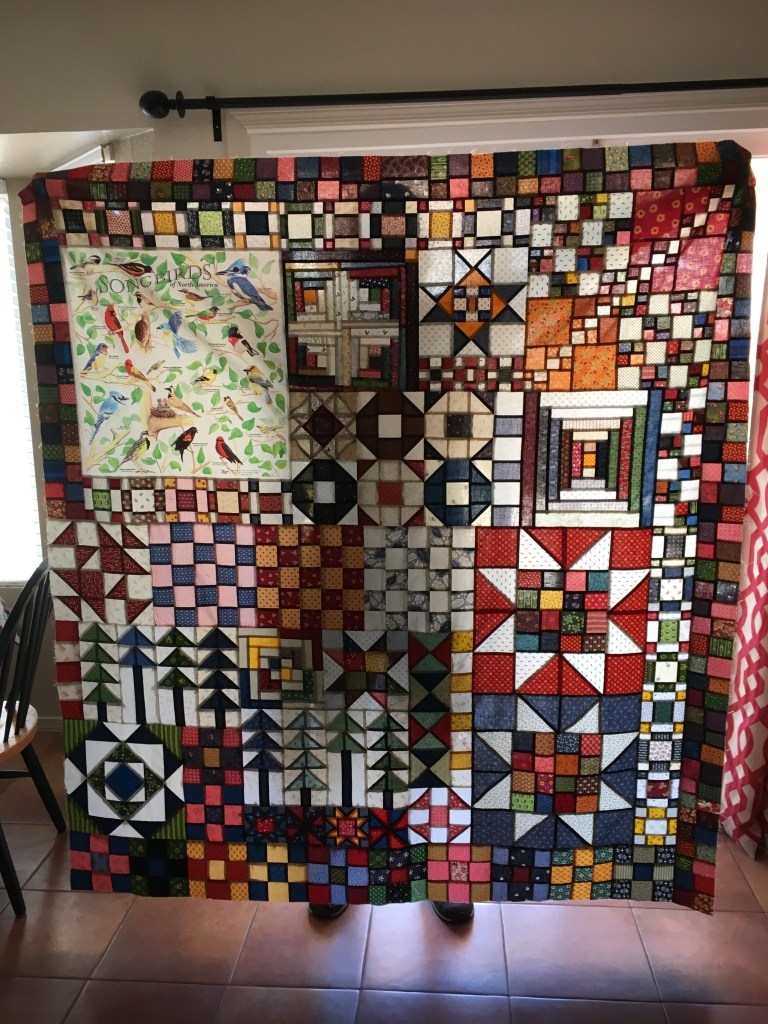
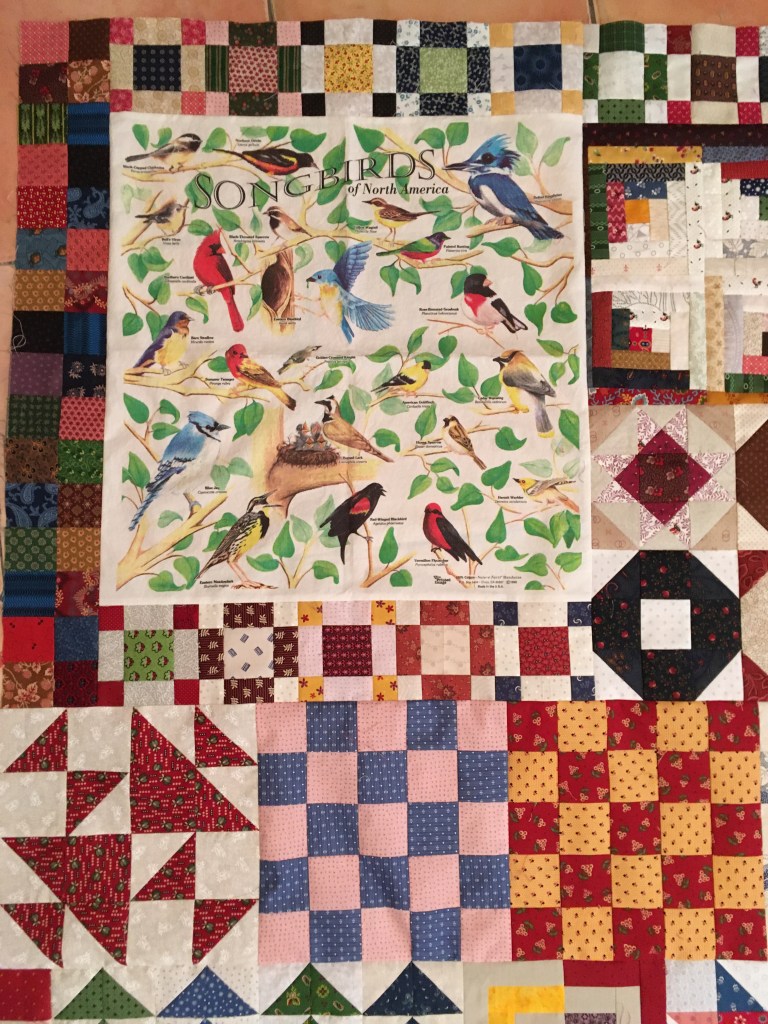
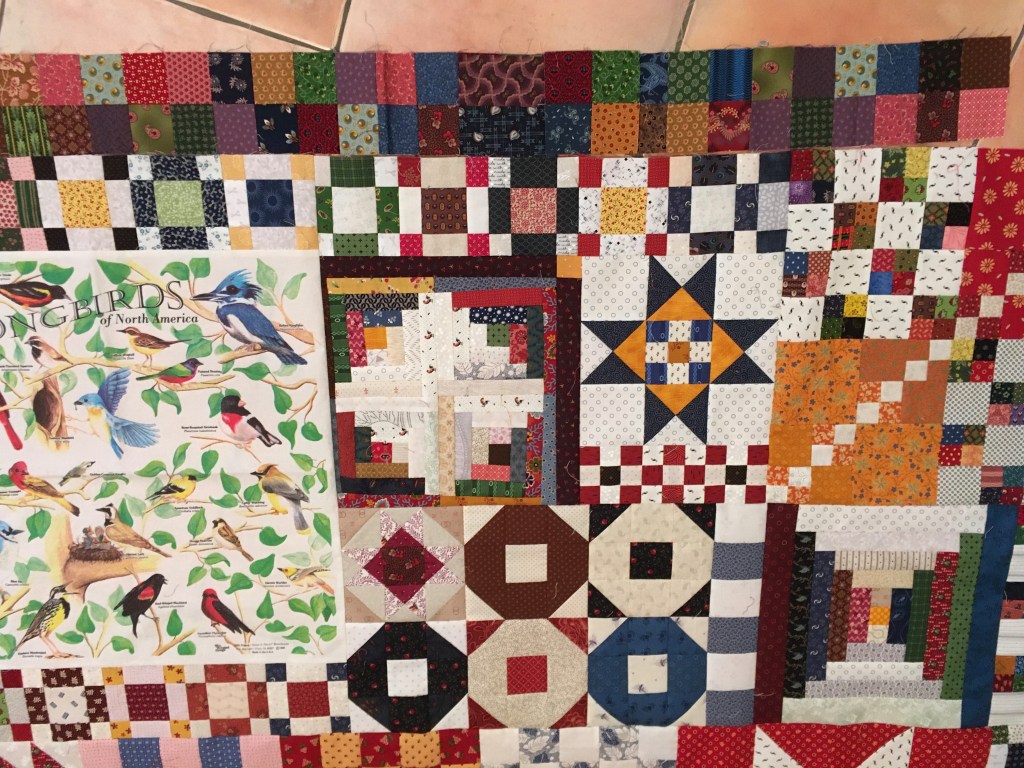
I even incorporated a bandana that I had purchased years ago from a gift shop at a Ranger Station. Even though I love the birds, it’s the part that gave me the most trouble because of its irregular size. But I needed it there to balance the two gigantic stars. (What was I thinking when I made those?!) And I promised myself I would not make any new blocks, only use what I had and when, or if, absolutely necessary do a little patchwork to fill in spots.

Well, when the time came to sew the two halves together — the final seam before the dark borders — I ran into trouble, I admit. There was a fair amount of sighing, hand-wringing, Argh-ing and inward tears. My math hadn’t worked perfectly, sob, so I had to shave off a 1/2 inch here and 1/2 inch there. Which, in the world of patchwork, is a huge amount. Oh no! There went my “perfect” blocks! Sob! But Anne Lamott, of Bird by Bird fame, whispered to me again, “Perfectionism is a form of tyranny!” Thankfully I was able to resist the urge to dump it all again into the darkness of a storage bin in a fit of pique.

I persisted, though I do weep for the mutilated Log Cabin block … but I’ve learned that if I tell myself stories as I put together a quilt — especially when I am encountering problems, which happens often; I swear I could write a book called, How NOT to Make a Quilt! — I can rationalize my mistakes and errors well enough to finish a quilt and be emotionally and/or aesthetically satisfied with it.

So I told myself the story that the now-wonky Log Cabin was old and leaning like the tower of Pisa and that it was where the Swamp Angel lived! Whatever works, right?! As Joan Didion wrote, “We tell ourselves stories in order to live.” How true.

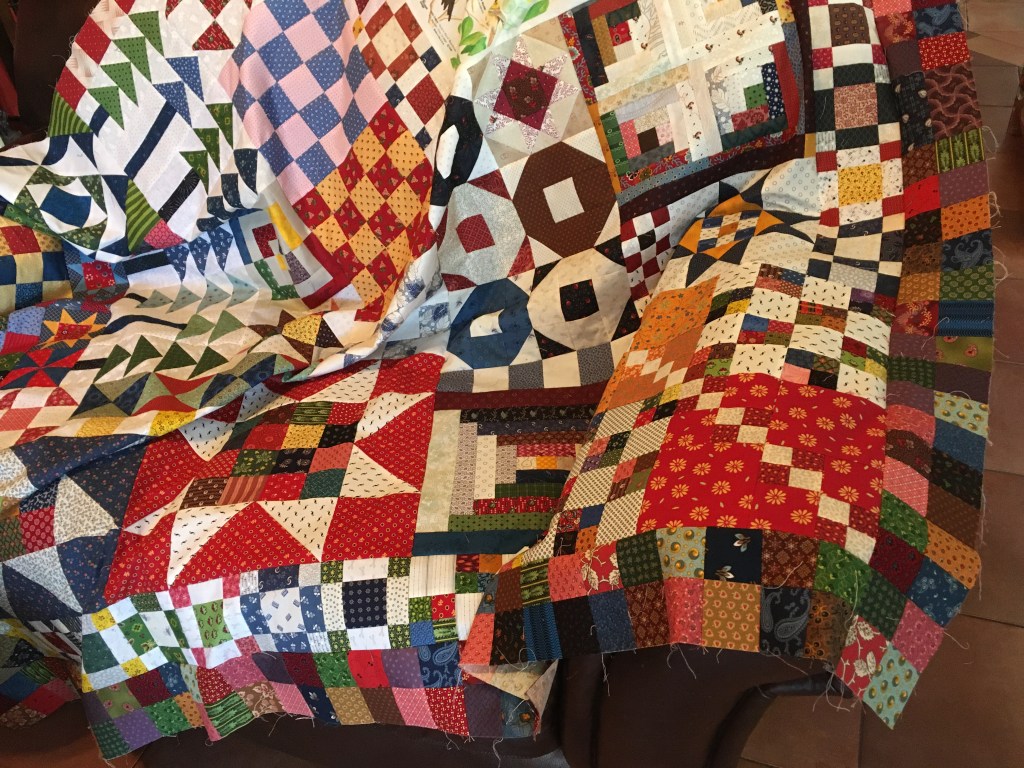
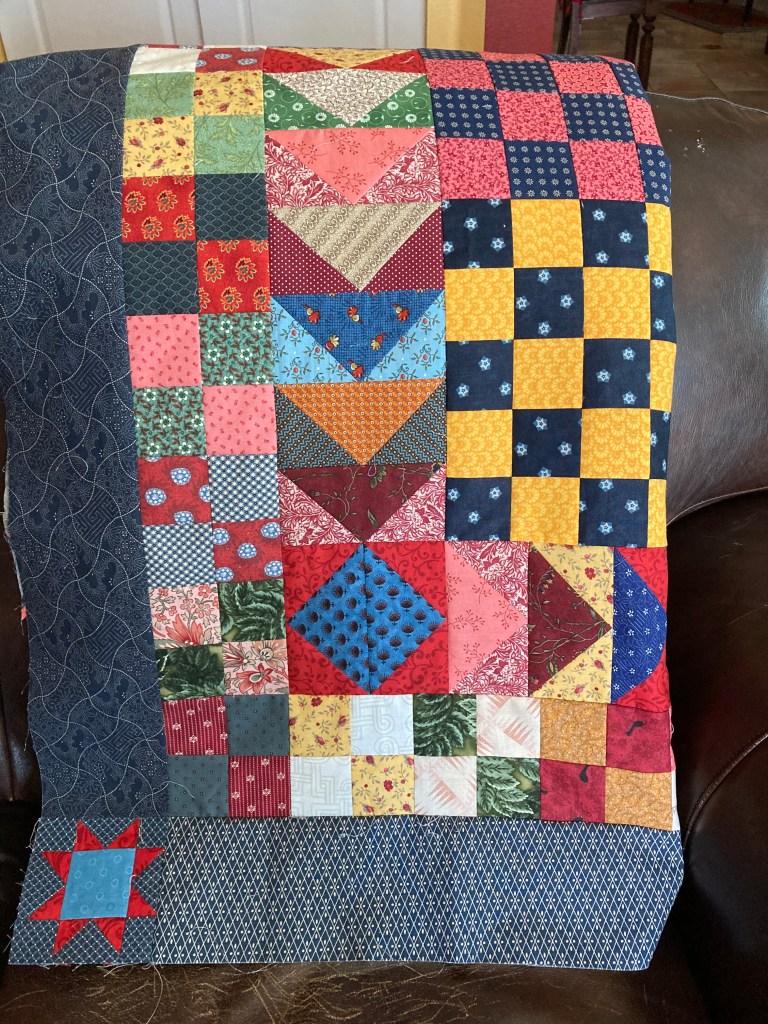
Here’s a photo of my trusty quilt-holder standing in front of the door with the finished quilt, plus a few others.

Thank you, Swamp Angel. I am in your debt.

Miniature madness

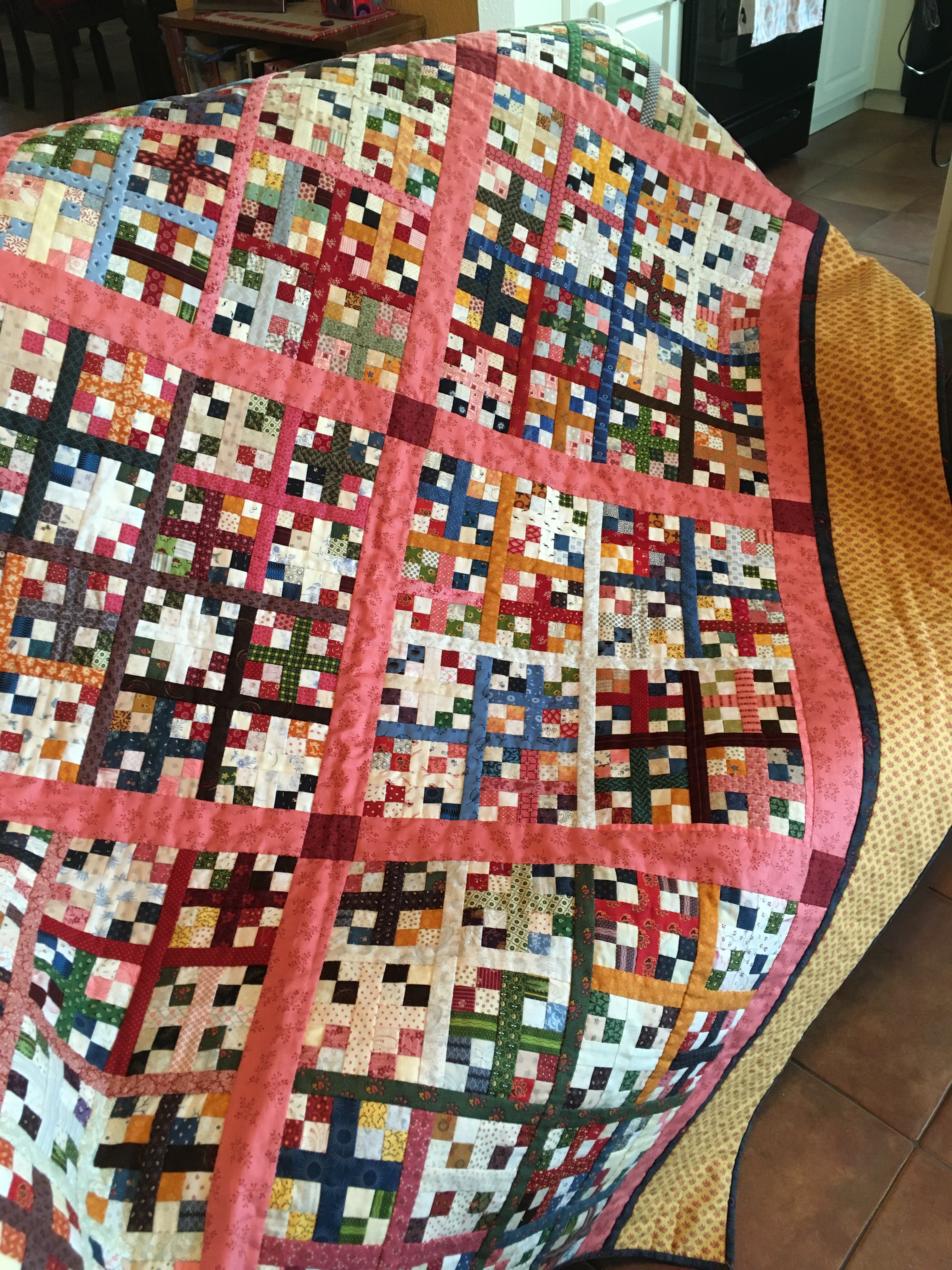
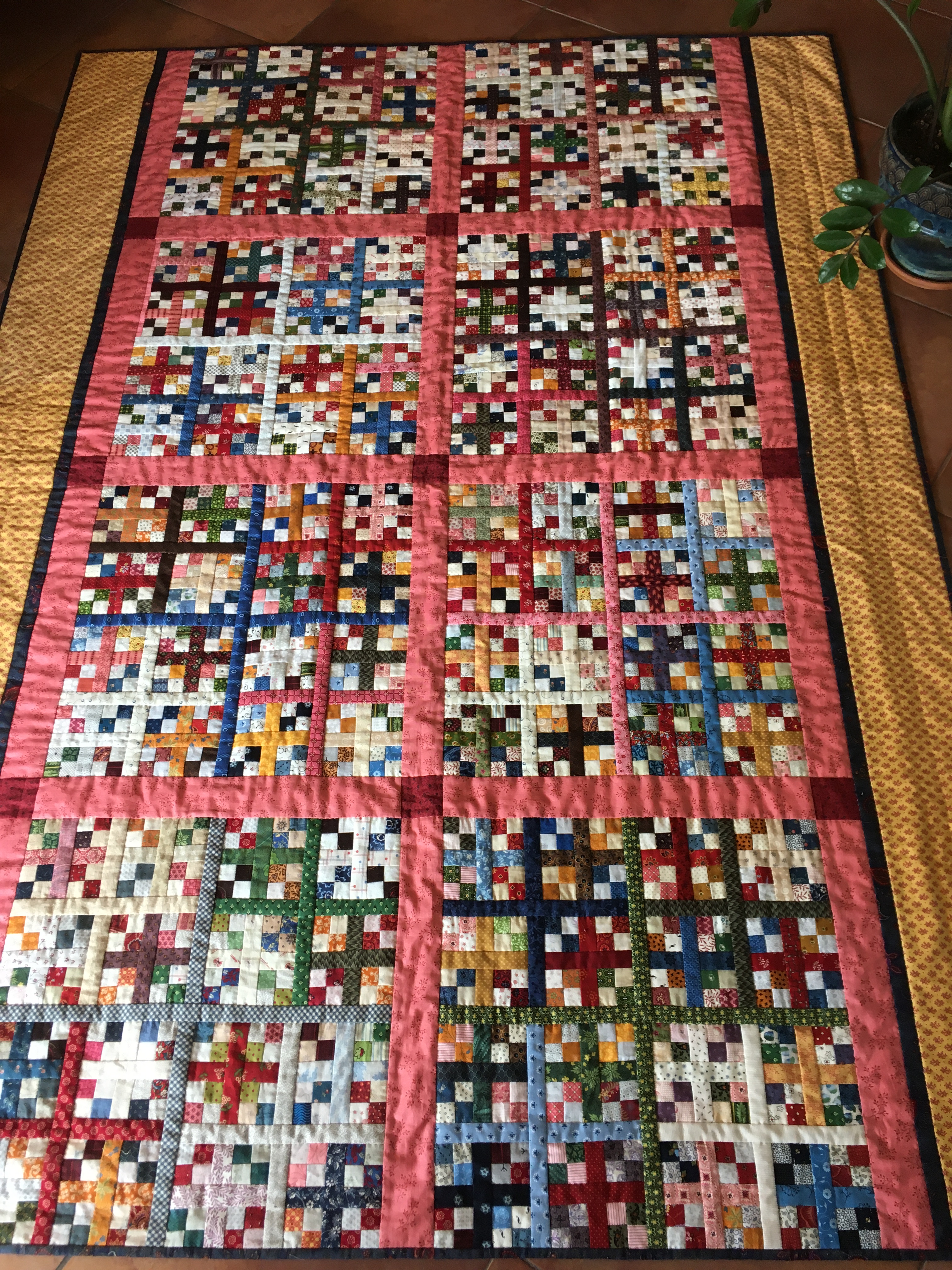
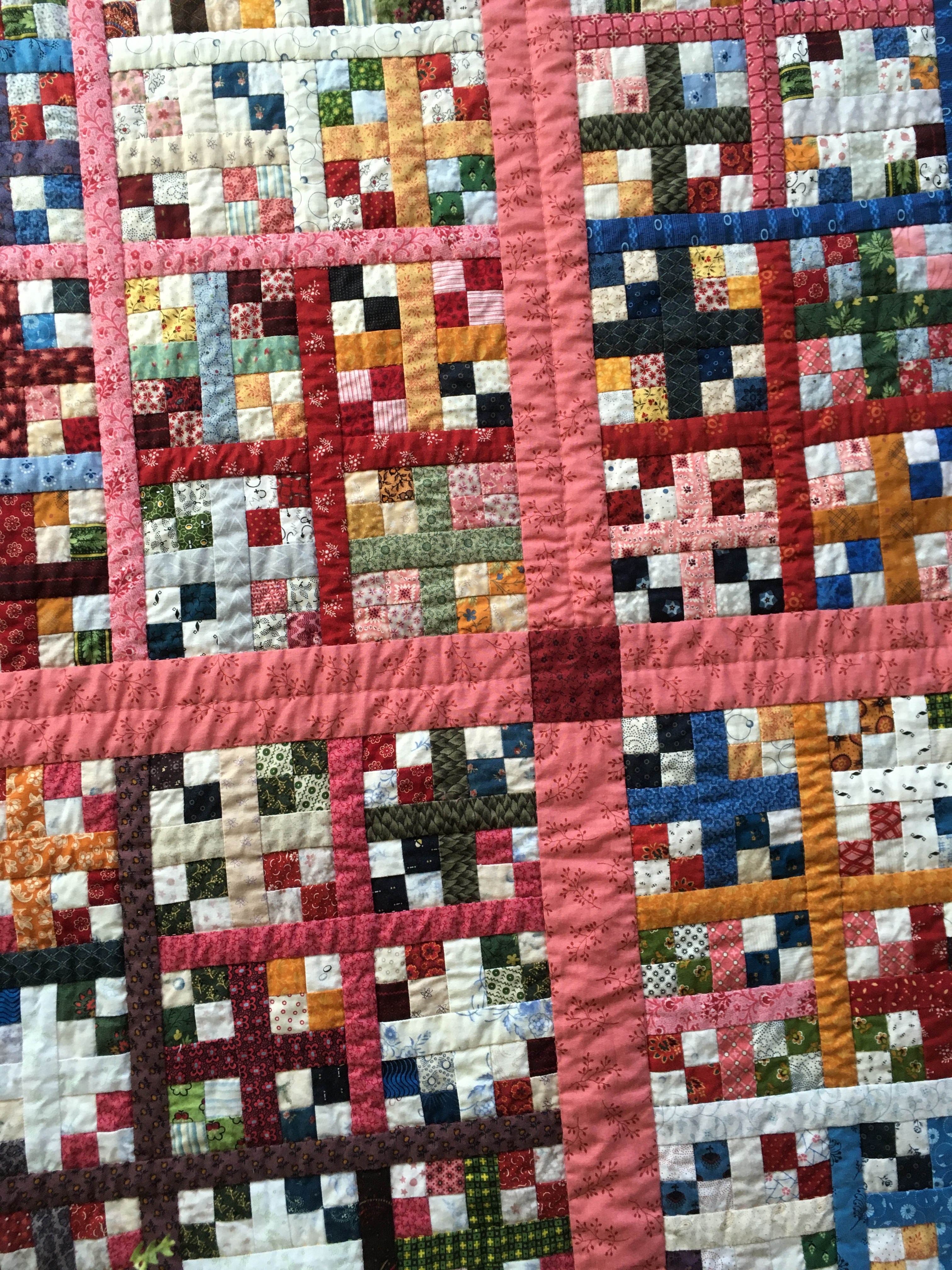
One of my favorite quilting books is titled Small Blocks, Stunning Quilts by Mary Elizabeth Kinch, where almost every block is no more than 3″ in size. 4″ max! Which means the pieces needed to construct many of the blocks are cut at an inch or less! As I paged through it I was riveted by an antique quilt the author referenced, in which the pieces — the design unit — were half an inch square! There must have been a million of them. A truly scrappy quilt if ever there was. I could imagine the quilter using up every tiny slip and scrap she could get her hands on — maybe even reaching for the bits her fellow quilters discarded on the floor — and putting them all together in a uniform manner using a Four Patch Cross design. Once the blocks were a certain size the quilter (unfortunately unknown) sashed them with red and then put a broad red border around them all. It is stunning and I’m sure a person could study the quilt for hours on end and always see something new. Because of the random use of both light and dark sashing strips (the Cross portion of the design block) a thousand secondary patterns were created. A true marvel. And hard to fathom the hours (Months? Maybe a year or two?) it took to create the quilt.

Well, I had to give the idea a whirl! I used a slightly larger strip to sub-cut into my squares (1 1/4″ instead of 1″) and started making my tiny Four Patches. I began the quilt 15 years ago or more. I know that because I started piecing them on a sewing machine I no longer own. I’d make a few small blocks and then set them aside. Then make some more and put them away again, impatient with how slowly the pile grew and how careful I had to be with my seam allowance. (Miniature blocks have little to no wiggle room for error.) In fact, half of me wondered if I’d ever truly finish enough to make a decent size quilt out of them.


In between I got a lot of other projects done but every year or so I’d come across these tiny blocks and admonish myself to be serious about finishing them.

Fast forward to this pandemic year. For me this has been a year of Finishing. It thrills me to say this, as I am one of the worst when it comes to starting something but not following through. Sigh. All thanks to ADD. It explains why I have so many orphan blocks and random patchwork pieces buried in my fabric stash. (See previous posts about those.)

After a lot of dithering, I asked a good friend and quilt shop colleague to help me choose the color for the wide sashing strips and a border. Pink and gold were out of my comfort zone but I decided to take the risk.

Unfortunately when it came time to put the blocks together I found some were smaller than others. Ack! No doubt it was because I’ve improved in my piecing skills since I first started, plus I’d finished the blocks on a different sewing machine, one with a more accurate 1/4″ seam allowance. What do to? I didn’t want to just throw the smaller ones out but I certainly did NOT want to make any more! So I performed a bit of surgery (ahem) and used a narrower seam in places. Phew! Mission accomplished.

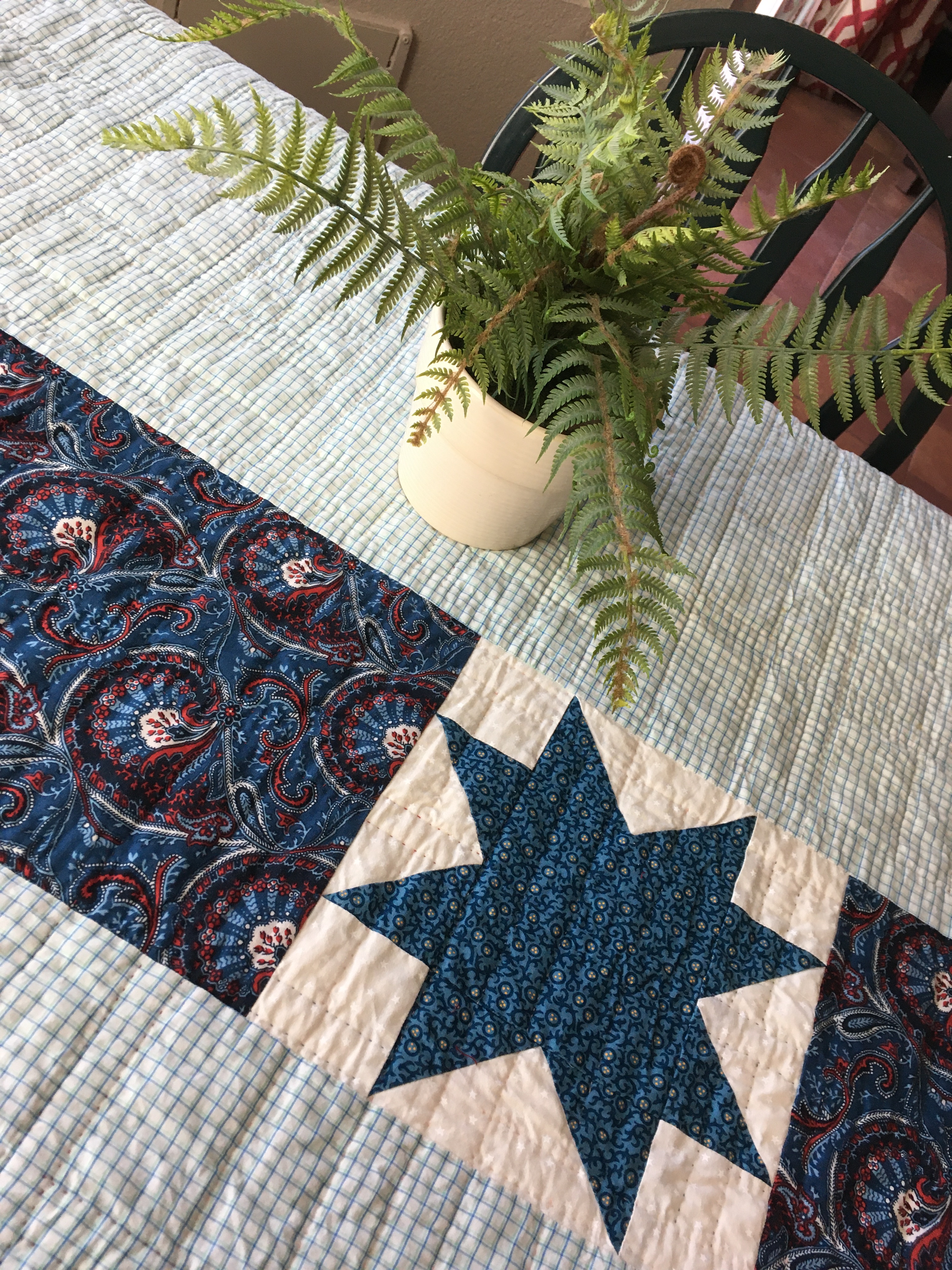
I felt this quilt was begging to be hand-quilted, which started me another journey. For the backing I used a hand-woven check from India that I had on hand. (In this pandemic year I’ve also been intentional about using what I have; something else that has been both challenging and satisfying.) It’s the kind of cotton weave used for dhotis and lunghis. I knew it would be easy to needle and feel wonderfully soft underneath. As there wasn’t quite enough I pieced the back with one of my orphan stars and a swatch of left-over paisley.

While hand quilting told myself I wouldn’t let myself feel rushed. That I’d practice patience and be content with however long it took. No fancy designs, just a humble in-the-ditch quilting. I started in December and finished in April. Not too bad. I made the process a little more fun for myself by using different color threads: dark red, pink, yellow and blue. I do love the YLI brand.

Now that the quilt is completed I think I’d like to do this quilt pattern again someday, but I’d start with a slightly bigger square. Of course the overall effect would be different as it wouldn’t have the variety of light and dark color plays which create the secondary designs. It certainly is perfect for quilters like me who are loathe to throw away the tiniest of scraps. Someone on Facebook commented: “A two inch square is yardage!” So true. In fact, I noticed that after working with such small pieces that a 2″ scrap looks pretty chunky to me and a 5″ block seems truly clunky!

CLUTTERBUCK GANJ 2.0 (no regrets)

Riffing on the same theme, here is another quilt started with long forgotten blocks dug out of a bin while searching for something else.

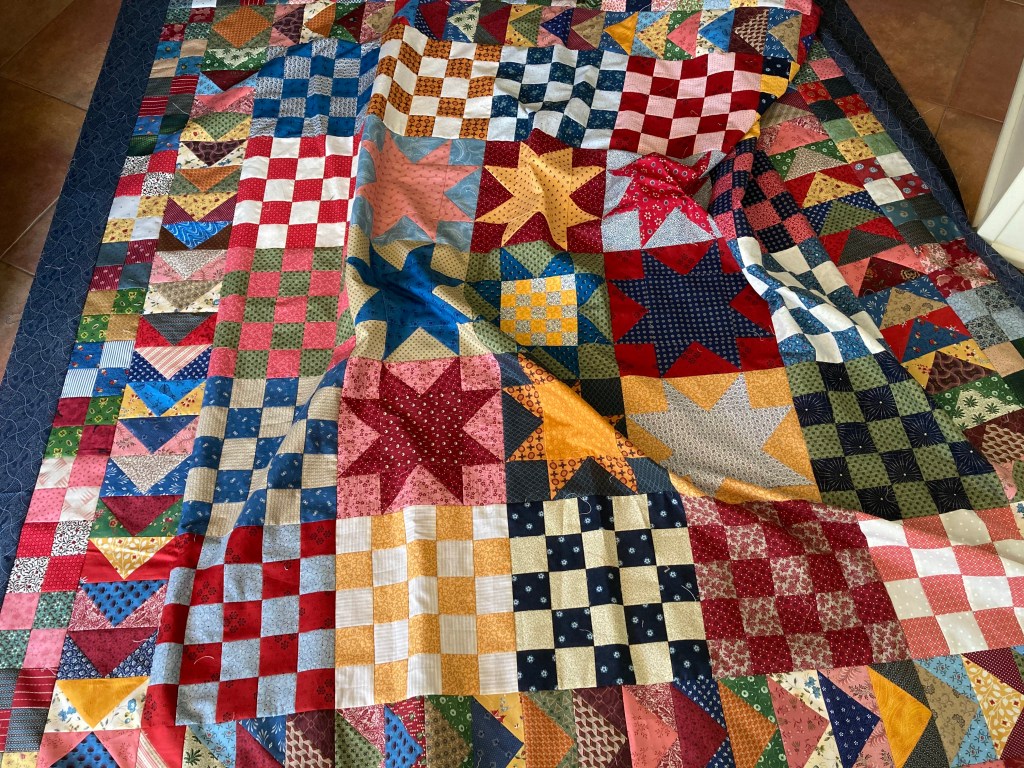
I love the process of putting together a quilt by letting it grow organically, dependent on my mood and inspiration — both of which might converge over a very long space of time. I made these Sawtooth Star and 25 Patch blocks about 15 years ago. I don’t even know why I put them away.

But this pandemic year has a been year of finishing UFOs for me so after many fits and starts I’ve completed another Medallion-esque quilt.

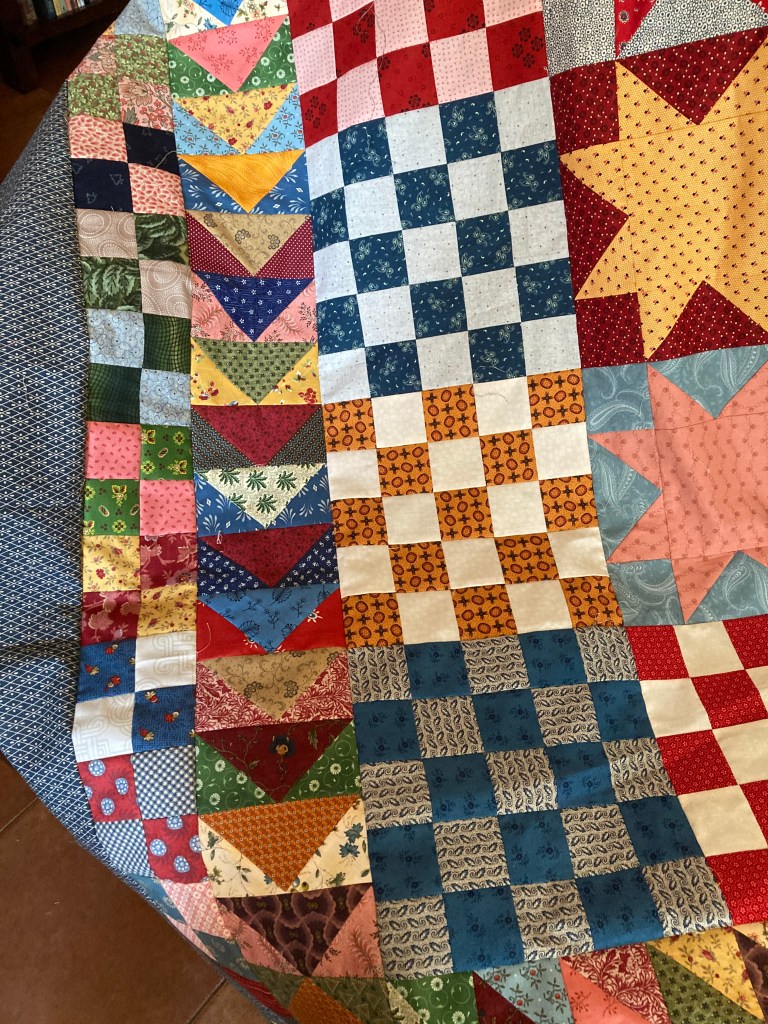
This time, however, I decided not to worry about “the eye needing rest” and also whether I had Kevin’s approval. (Shh, don’t tell him!) I purposely didn’t seek his opinion out and I just added the two busy borders (Flying Geese and Four Patch) without giving anything too much thought, happily using up triangles left over from other projects and cutting deeply into my stash for the Four Patches, letting my Accuquilt GO do the work of the cutting. I put “ugly” fabric in as well as some of my favorites. I just let them all play equally and tried not to let the ever-present critic on my shoulder get a word in edgewise.

I do like “busy” quilts and I love the idea of using what I have on hand, (which is plenty, thanks in part to generous donations from a friend ridding her stash of Repros (1800 Civil War reproductions prints).

There’s not much else to say except that it’s a toss up as to whether I love this Clutterbuck or the previous one more. They were constructed in the same spirit, for the same purpose, but they each make quite different statements.

I’m keeping my quilter busy these days. She said she’s been swamped during the pandemic because everyone has been home sewing. Guilty as charged.

CLUTTERBUCK GANJ

Or: QUILTING DURING COVID

I told my grandsons a couple weeks ago who were making their very first quilts: “You learn something from every quilt you make!”

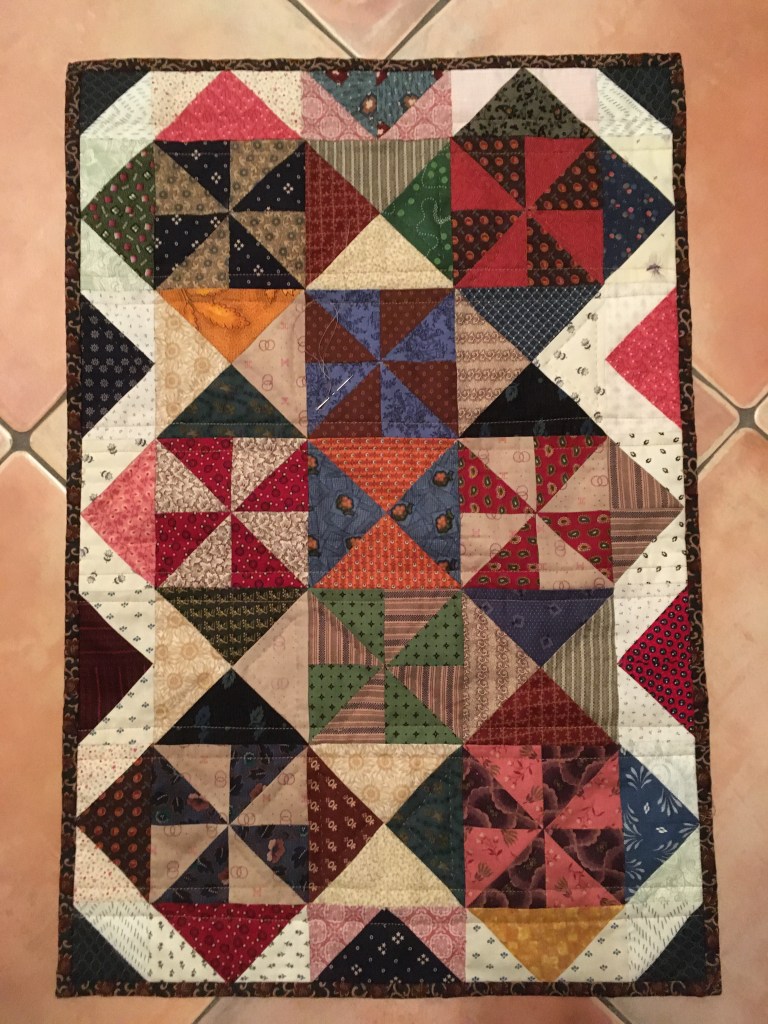
Well, what I learned with my current quilt is how important light and dark values are. And also how important “the eye” is in accessing and processing a complicated pattern. I started this one because I had recently made another miniature quilt, one of Kathleen Tracy’s patterns from her book, The Schoolgirl Sampler. Even though her preferred colors are blue and red (like me!) she had used browns and golds and greens in her miniature and since I had those in my stash I decided to use similar colors.

I found the end result deeply rich and surprisingly satisfying. So when I was done with it, I decided to make a bed-size version with the same colors and using the same design elements.

This pandemic year has gotten me digging deep into my stash and being surprised with forgotten bits and pieces of patchwork that I’ve put away. I found a lot of Star blocks, several of which I put into another quilt I’ll blog about next.

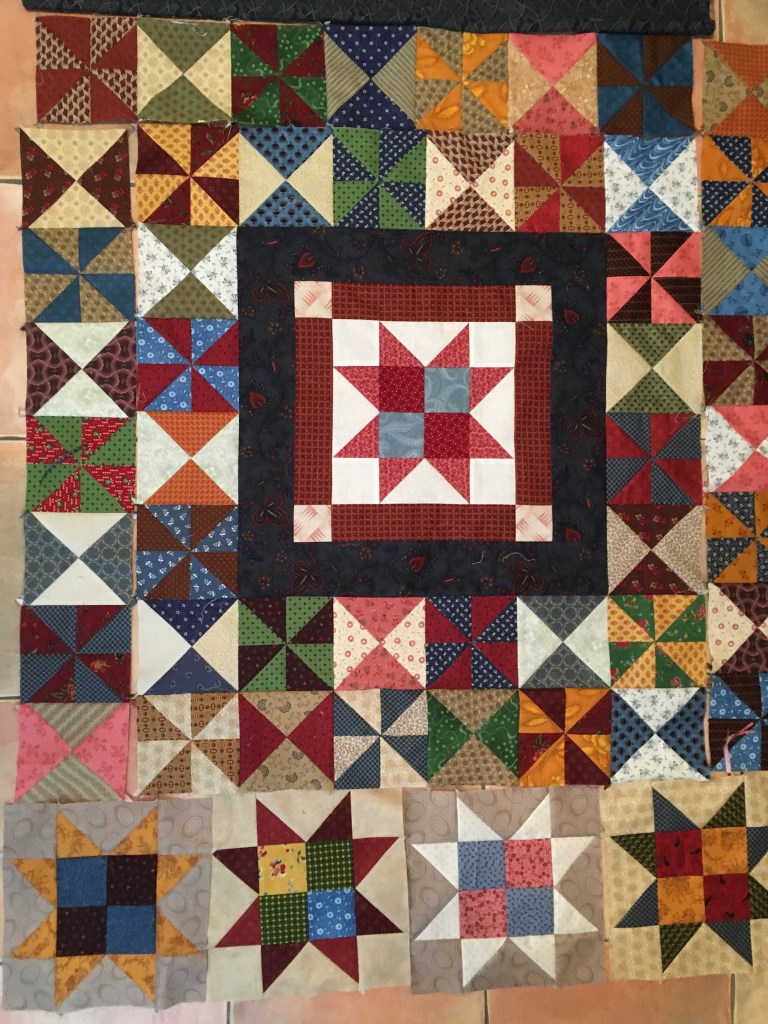
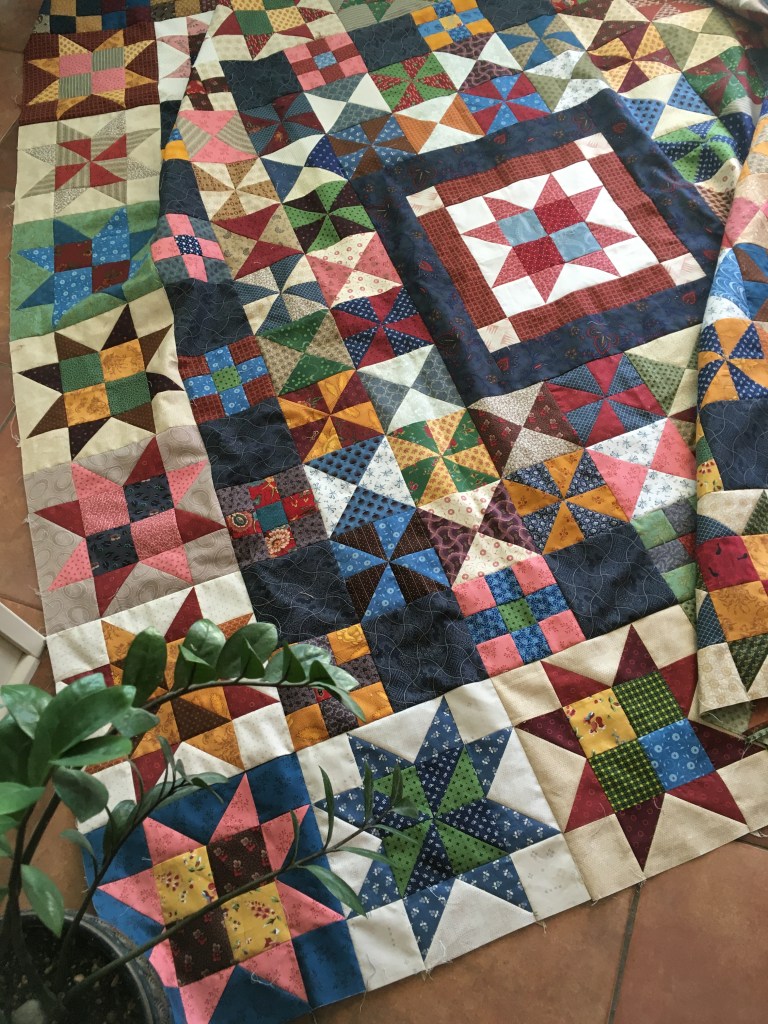
Also, because I’ve recently become fascinated with Medallion quilts where the quilter starts with one central block — it might be as small and innocent as a simple Nine-Patch, or something as elaborate as a beautifully designed and constructed appliqué piece — I started mine with a Sawtooth Star and then used the blocks in Kathleen Tracy’s mini: Pinwheels and Hourglasses. Round and round the quilter goes until the quilt is the size needed. Or she runs out of fabric. Or she runs out of ideas! (See my previous post where I started with a Tree as the center.)

When I had gotten the quilt to about 40 inches square and spread out on my “design wall” (AKA the tile floor in my sewing room) I noticed that Kevin, who usually comments encouragingly about my WIPs (works in progress), had been uncharacteristically silent this time. When I plucked up courage to ask him what he thought, he replied, “Well, I didn’t want to say anything. But, since you asked: it looks chaotic.” Then added like a true artist, “There’s no place for the eye to rest.”

I had to agree. “I thought the same thing. It looks like Clutterbuck Ganj!”

Growing up in India where we did a lot of train travel, there was one particular station en route to somewhere in north India, I’ve forgotten where exactly, that my younger brother and I would always get a giggle out of. It was a tiny middle-of-nowhere station called Clutterbuck Ganj. (Ganj meaning village.) No doubt named after some Britisher from the Raj era. And always after that he and I would use the name of the whistle-stop station to privately signify something was hilariously crazy, chaotic or confusing.

So here was my quilt spread out on the floor, waiting for me to add the next round — a bunch of 10 inch Sawtooth stars. I had almost all 24 of them made. And now we agreed the quilt was giving us both anxiety! What to do?! Abandon the whole effort? Use the stars in another quilt? Stuff everything into a bin so that I wouldn’t have to look at or think about it for a few years? Ugh!

After much hand-writing and some sleepless nights, I came up with a solution: use a separation round of dark blue with intermittent blocks. I chose a Nine-Patch but then realized I’d have to figure out the math for a 5 inch Nine-Patch. Argh. Sometimes I make things harder for myself. But my idea worked — at least in my mind — to stop the action a bit; to give a pause. Just like the little station of Clutterbuck Ganj: a rest to the harried traveler and a weary eye.

At least it worked well enough for me to carry on with the quilt. I am putting on the last round now of dark Four Patch blocks which act like a final frame.

(Excuse my toes.) I do adore this quilt. Not just because it helped me use up almost all of the browns in my stash. Yea. This pandemic year I’ve been drawn to these dark complex colors and I think it must be because they have helped me feel grounded. Secure. Tied to the life-giving earth in a year that has seen way too much suffering, anxiety and death. And I’m so grateful for the distraction, the therapy and the bodily labor. Sometimes quilt-making even feels like prayer. And it feels good to go to bed at night with that sort of exhaustion.

So, two more sides to go with the Four Patches, trim the threads, and then it’s off to the quilter! I can’t wait to snuggle under it once it’s done. I think the embraces of this particular quilt will feel especially rich and profound.

I’m just so happy I didn’t abandon it to languish for years in the darkness of a drawer.

Shall be like a tree …

The opening verses of Psalm 1 are some that I still have memorized from childhood (when we had to memorize scripture and write a letter home to our parents before getting our afternoon tea in boarding school) and when I stretch in the morning with the yoga Tree pose, I say verse 3 to myself as both a prayer and an aspiration.

I also love to look at and read about old quilts, especially medallion quilts, where the quiltmaker starts with a center medallion, which makes a strong statement of theme and color. Often the medallions are an elaborately appliquéd block to show off the sewing skills of the quilter. Surrounding the center focal point, the quilter then adds a series of borders, or frames, each one a different patchwork design.  

But one of the really interesting, even shocking, things I’ve learned from reading about these old quilts is that sometimes the quiltmaker, to get the various patchwork frames to fit, would simply lop off the design where needed, and then carry on with the next design element. What?! This practice would never win anyone a prize at a quilt show, but yet these quilts hang in museums and show up in books as historical artifacts of practicality, ingenuity and boldness.

I’d been wanting to try my hand at a medallion but since I have never learned to enjoy doing appliqué, I thought I’d start with a tree block I’d made recently. When I was done with it I had said, “Boy, I’m never making another one of these again!” and put the block away, well out of sight.  But having Psalm 1 on my mind, I dug it out and decided to start with it as my simple statement, and then just add fun blocks around the tree, creating my own medallion quilt and letting it grow organically, using other discarded (and sometimes completely forgotten about!) patchwork I’d made months, even years, before.

IMG_2422

The last frame (border) is a set of Nine-Patch blocks I discovered at the very bottom of a bin while hunting for something else. (A bad habit of mine: putting things away that either I think I don’t like or get bored with. I had truly forgotten about these!)

Anyhow, I finally got the quilt finished this summer, even crazily cutting down some of the final blocks to fit the rest of the quilt, taking courage from quilt makers of a hundred years ago!  I took it to the longarmer last month and I do like the final result, despite all the fits and starts. Despite all my sighs & groans, and the weird math that I had to “fix” with scissors. 

My favorite parts of the quilt are the places I substituted similarly hued half square triangles for a 2 inch square, or 4 one inch squares to create a 2 inch square. These smaller pieces were lying close to my sewing machine, leftover from the series of miniatures I made this spring. Sneaking them in felt both rebellious and playful.

Most of the fabric is from 1800’s Reproductions. I love to look at the sometimes outlandish colors and designs they created back then. I especially adore the purple bees (or are they flies?!) on a cream background. The corner stars are from a Kathleen Tracy pattern.  The backing is a lovely William Morris print from the quilt shop I am lucky enough to be working at these days. Which, actually, is where all the other fabrics came from as well. 

The most accurate photo in terms of color is the one taken by a colleague at the quilt shop. We just  laid the quilt down on the classroom floor, so the feet and legs of furniture and a human (me) are visible on the perimeter. The stuff of real life, right?! After she took the picture she (jokingly, I’m sure) asked if I’d written up the pattern. I laughed and laughed. (If I ever had to write up a pattern the title and text would be How NOT To Make a Quilt!)   

0

Someday I might count all the pieces it took to make this quilt. A few thousand, I’m sure. Nah, I won’t do that. Why take the time? (I do know that it took an hour just to give a final press to all the seams with Mary Ellen’s Best Press before taking it to the quilter.)

Besides, I’ve already got an idea for a second medallion, starting with another set of forgotten 10″ Sawtooth Star blocks I unearthed when I unearthed the Nine-Patches. And so it goes! I’m off to the races again. That, after a recent funk, feels great.

Something amazing happened …

… hand-quilting my way around a miniature quilt.

This afternoon I finished up the hand-quilting on my 3rd little Weekend Mystery quilt, this particular one made for a friend.  (See the previous post about these quilts, offered for some weekend fun by Kathleen Tracy on her Facebook page: Small Quilt Lovers.)

Just as for the previous two, I deconstructed several 1 inch squares I’d put together years ago. (Boy, has my piecing improved.) and reconfigured them into this new pattern. And this time I managed to get the center 2″ Hourglass block right.  Also I realized again what a challenge small pieces are to work with. You wouldn’t think so, would you? But the seams on such small pieces sometimes have a mind of their own and it takes a lot of pressing with a hot steam iron to get them to behave.


IMG_2003

Anyhow, as I was finishing up the hand-quilting on my little doll quilt, I listened to some Scarlatti and Couperin keyboard music, and tried not to think about what we’re all constantly thinking about: COVID-19! And as I got to the end of the quilting, I even wished I had more to do.

And then I noticed something! Well, two things, actually.

First, I noticed how much better (smaller and more even) my stitches were. Yea! Practice, practice, practice! And these sweet little doll quilts are the perfect place for that very thing.

But much more significantly, I noticed how calm I felt. As someone who has suffered the majority of my life with depression and anxiety, this was pretty remarkable to me. I almost couldn’t believe it. 

When I told my husband a bit later, he said, “I believe it! Now you know why I like to hit tennis balls for an hour!”

There really is value in doing the same thing over and over again, even the smallest action. It demands intense focus and ends up being very meditative.

fullsizeoutput_1030

I bet my friend who is using this time of quarantine to paint rocks would say the same thing. On the weekend she placed these two lovely miniatures in my yard!

fullsizeoutput_1033

I am thrilled to have discovered something else to help me get through these weird and stress-filled weeks. Hand-quilting: a natural antidepressant!

So tomorrow I think I’ll look for another small piece to practice my quarantine art  on. This little quilt by my bed could definitely use some more stitches, don’t you agree? 

IMG_2051


From teatime to breakfast

Another quilter I love to follow is Kathleen Tracy, the author of several books that include both quilt-making history and patterns for small quilts. She uses predominantly 1800 Reproduction (aka Civil War) fabrics and her designs are mostly quite accessible for beginners. She has a gentle approach and a sweet homemade aesthetic which makes you feel connected to the heritage of quilting.

She began her quilting journey by making doll quilts for her daughter. So on her Facebook group she will often suggest a quick “mystery” quilt, which last weekend I decided to participate in. On Friday evening she gave the instructions to sew 14 Four Patch units. That evening she gave the next step. The following morning, the next one, and so on. By Sunday evening or Monday morning most of us had succeeded in putting together a sweet little doll quilt.

(Is there a law against having this much fun?)

fullsizeoutput_102c


And because … you guessed it! … I had many more one inch squares left over from past projects — Kathleen Tracy makes wonderful use of one inch squares! — I made a second mystery quilt, though this time I actually deconstructed (More insanity?) some blocks to reconfigure the tiny squares into rows.

IMG_2005

This second one I started at teatime yesterday, had it put together, quilted and bound by bedtime, and early this morning, too excited to sleep in, I finished up the hand quilting on it before breakfast!

fullsizeoutput_1025

The rest of photos are some of the other Kathleen Tracy designs I’ve made, two of which did prove a challenge. One has “Prairie Points” around the outside edge: something I can say I’ve done once and will never do again, thanks. The other is the Tumbling Blocks, which I hand-pieced and will not likely repeat, either, though the experience of working with Y Seams was valuable. And I do like the 3-D effect of the blocks.

One of them is a triple Sawtooth Star (my hair-brained idea) surrounded by one inch squares.

So if you’re looking for some quick and satisfying projects — and you have tiny scraps you haven’t been able to throw away but don’t quite know what to do with — check out Kathleen Tracy. Her blog is: https://sentimentalquilter.blogspot.com


A very necessary (In)Sanity

Our COVID-19 quarantine isn’t close to being over. And neither is my obsession with miniature quilts, apparently.

I asked my husband to help me sort and put away all the scraps from the previous four I’d made, which he graciously did. But almost immediately (doesn’t the muse always seem to work this way?!) I was digging into my bins for yet one more Lori Smith pattern that I wanted to create: another one with tiny triangles dancing around it.

This particular Lori Smith pattern is interesting in that she designed it with borders only on three sides. Then I remembering seeing a quilt on a large bed (maybe it was during a tour of an historical home in Virginia) with no border at the top because, it was explained, pillows would hide the top of the quilt anyway, and in this way fabric (not to mention effort and time) was not wasted. Perhaps this is what Lori Smith had in mind when she wrote up the pattern for this little miniature with the Sawtooth borders around each 3″ Pinwheel block.

fullsizeoutput_1023

Soon I was cutting 1 7/8″ squares into two triangles again and thinking to myself, Lori Smith is insane! (Or she’ll make us quilters insane trying our best to create her quilts.) But I kept on because I wanted the finished product. And because … well, what else is there to do in this time of quarantine?

Actually, this intense focus — these ridiculously small pieces; this insanity — is exactly what I need to keep my own sanity!

To make such tiny triangles work (i.e. not be completely lumpy with the seams underneath and stretched out of proportion) I’ve learned you HAVE to press all the seams open. Which I dutifully did. I even took pictures of the open seams, just to show what the innards of a quilt can look like. Then to control and tame the whole 16″ X 20″ finished quilt I got out Mary Ellen’s Best Press and used it liberally with my hot iron. Since quilt shops are closed I am having to scrounge my stash for appropriate colors, batting pieces and backings.  And I was pleased with the lovely little zigzag stitch my sewing machine performed to join two lengths of batting to give me the width I needed for it.

Making scrappy quilts such as these is also the perfect time and place to use up the ‘ugly’ fabrics you never cared much for but somehow have found a home in your collection. And what a pleasure to observe how the less-favored ones are made beautiful by being put next to the lovelier, more-valued fabrics.

When I was done I wasn’t ready quite yet to ask my husband to help me put all the tiny scraps away again, though. Since I seem to have fallen back in love with the 1800 Reproduction prints, I wanted to play with them more.  One evening a random internet image search of the Courthouse Steps pattern (a variation of Log Cabin) produced an image of guess what? Lori Smith’s very scrappy interpretation. I almost swooned. Within minutes I was at my sewing machine again and could hardly sleep that night for the excitement.

I decided to hand quilt this one. (The book in the corner is to show what my husband does during quarantine. He finished this 1400+ page novel in about 11 days! He said he enjoyed it as much the second time as when he first read it more than 25 yrs ago.)

But when I was finished with this mini (and because there were still enticing piles of strips left on my sewing table) I came up with the idea of making a set of  placemats. Each one is different in terms of color use, but all are united by a center red square, straight-line quilting and finished with a blue binding. The backs of each of the six placemats are all different. When I finished each one it became my ‘favorite’ … until the next one was finished! And I’m happy to report I’ve made quite a good-size dent in my stash.

Along with some great music by Josh Ritter (thanks to my son), John Prine, (may he rest in peace) as well as Schumann, Mozart and Bach, we are quarantining well. But our hearts break for those who are truly suffering and we pray for an end soon.

What are you doing to stay healthy and survive this strange time?